How to Find Toy Manufacturers in China: Key Regions & Methods
- Date:
- Author: SVI Content Team
- Share:
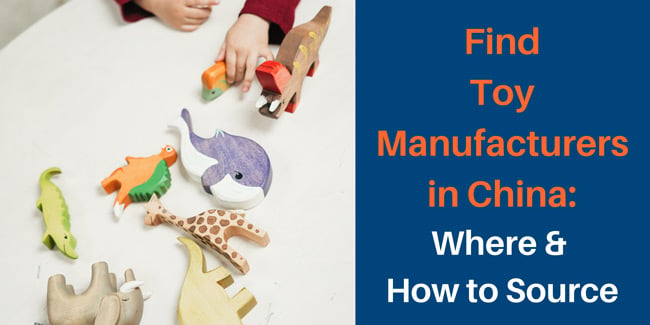
China is one of the world’s largest toy manufacturing and export hubs, with its output accounting for over 70% of the global total. Its complete full-chain closed-loop industrial ecosystem enables it to undertake manufacturing, support, R&D, and design functions in the global toy supply chain for a long time.
If you want to find a toy supplier, China is definitely one of the options you should consider when evaluating where to manufacture. However, finding a toy manufacturer in China is not simply about choosing the factory with the lowest quotation. Toys must meet strict safety and quality requirements. So how do you find a manufacturer that can meet both your product requirements and compliance standards?
This guide covers China’s main toy manufacturing regions, product types, and safety compliance requirements. It will help you narrow down a suitable China toy factory.
Part 1. China's Toy Manufacturing Industry: Why It Leads the World
China’s strength in toy manufacturing is not simply its labor cost. Its deeper advantage is the depth and completeness of the supply chain. All things like materials, molds, components, assembly, and export logistics can often be sourced within the same industrial cluster or nearby regions.
In short, China’s toy manufacturing ecosystem offers several advantages:
- Integrated supply chain – Many production steps can be completed within one industrial cluster.
- Fast product development – Suitable for new launches, seasonal products, IP-based toys, and fast-moving e-commerce products.
- Broad product coverage – From low-cost promotional toys to electronic, mechanical, and highly customized products.
- OEM and ODM capability – Buyers can select existing designs or develop products from drawings, 3D files, or samples.
- Export experience – Many suppliers are familiar with the requirements of major overseas markets.
According to China’s customs data, exports of traditional toys under HS 9503 reached approximately US$40.57 billion in 2023, US$39.86 billion in 2024, and US$34.81 billion in 2025.
The United States remained China’s largest single export market for traditional toys in 2024, with exports of approximately US$10.55 billion.
Despite being affected by fluctuations in overseas demand and trade policies, the export base remains substantial. Meanwhile, smart toys and collectible toys are creating new areas of growth.
Part 2. Types of Toy Products in China to Source
China’s toy manufacturing covers virtually every product category, material type, and price point. Understanding these categories can help you narrow the search for China toy factory suppliers.
By Material
1. Plastic toys – the largest single category by volume
Common products include RC vehicles, action figures, ride-on toys, construction sets, and outdoor play equipment. Injection molding is the core process, and it’s where China’s mold-making expertise provides a particular advantage.
2. Plush and fabric toys
Products like stuffed animals, dolls, and pendants are produced primarily in Guangdong and Jiangsu. This covers everything from basic plush toys to customized characters that have broad appeal across both children and adults.
3. Wooden toys
Wooden toys are commonly used for educational products, puzzles, building blocks, and craft sets. It requires products to be with appropriate wood sourcing, coatings, surface finish, and applicable safety requirements.
4. Electronic and STEM toys
China also has strong capabilities in remote-controlled vehicles, robotics kits, coding toys, and other electronic learning products. These benefit from the supply chain that provides proximity to components and technical manufacturing expertise.
5. Rubber and silicone toys
Bath toys, teethers, squeeze toys, and sensory products are commonly made from rubber or silicone. Guangdong is an important sourcing base, particularly for products requiring specialized molding and material processing.
6. Collectible and designer toys (Chao Wan)
Blind boxes, art toys, vinyl figures, and limited editions have become a major export category, driven by brands like Pop Mart.
By Age Group
Some toys should have strict age classification applied for the safety of children. This will impact the safety requirements, testing and warnings required on the packaging.
1. Infants and toddlers (under 3 years): They face the strictest safety requirements because products may be mouthed or handled extensively. Material safety, small parts, mechanical hazards, and other age-specific risks require particular attention.
2. Young Children (3 – 14 years): It should set these as basic requirements: mechanical and physical safety, flammability, chemical content, labeling, and other applicable hazards. Standards such as ASTM F963 (US) and the EN 71 series (EN) are commonly referenced for toys.
3. Adults (14 years & above): Generally lighter regulatory requirements, but material safety still applies for collectibles that may have incidental contact with younger children in shared households.
Common Toy Safety Testing Areas
Depending on the product and destination market, testing may include:
- Chemical and material safety, including restricted substances and heavy metals
- Small parts and choking hazards
- Mechanical and physical safety
- Flammability
- Material and coating safety, particularly for products intended for infants or products likely to be mouthed
- Age grading, warnings, and labeling
Need Help for Your Sourcing Project?
Let SVI Global find the right suppliers and manage your project.
We guarantee quality and on-time delivery!
Part 3. Safety Standards for Toys and Age-Graded Children’s Products
The toy manufacturing process usually follows the order: concept design, 3D modelling, prototyping, mold development (for plastic and rubber products), pilot production, safety testing, mass production, packaging, and shipment.
For companies sourcing and manufacturing goods with suppliers, the best time to address compliance issues is before mass production, with systematic testing and inspections. A toy that passes testing for one market does not automatically comply with another’s.
Requirements vary by product category, intended age group, materials, functions, packaging, warnings, and destination.
In particular, products intended for children under three years old require closer attention to potential risks of dangerous exposure, such as small parts, choking, sharp edges, cords, etc. And toys with magnets, batteries, electrical functions, or chemical components require additional risk assessment.
1. China Domestic Market: GB 6675
Toy safety in China is primarily governed by the GB 6675 series of national standards, which covers key requirements for mechanical and physical properties, flammability, and the migration of certain elements.
China’s toy safety standards are currently being updated. The existing GB 6675.1-2014 remains applicable, while the updated GB 6675.1-2025 series was published in 2025 and is scheduled to take effect on November 1, 2026. When manufacturing toys for the Chinese domestic market, you should therefore confirm which version applies based on the product and production date.
Certain toy categories or product components may also fall under China’s Compulsory Certification (CCC) system. This can include specified electric, plastic, metal, and ride-on toys intended for children under 14. Whether CCC applies depends on the specific product category and applicable certification requirements, you should verify this before production.
2. US Market: ASTM F963 + CPSIA
China remains the dominant foreign supplier of toys, dolls, and puzzles to the United States. In 2024, the United States imported about USD 14.4 billion in this product category from China, representing 76.3% of total US imports in the category. This illustrates China’s continuing importance in the US toy supply chain, even amid broader trade and tariff uncertainty.
ASTM F963, the Standard Consumer Safety Specification for Toy Safety, is mandatory under the Consumer Product Safety Improvement Act (CPSIA) of 2008. The most recent version, ASTM F963-23, became effective on 20 April 2024, replacing ASTM F963-17.
It covers a broad range of hazards, including mechanical and physical properties, flammability, toxicology, small parts, batteries, magnets, projectiles, acoustics, ride-on toys, and labelling requirements. The exact provisions that apply depend on the toy’s design, function, and intended age group.
For a toy designed for children aged 12 or younger, the US toy safety requirements require companies to test the product for compliance with ASTM F963 in a CPSC-accepted third-party laboratory. Once compliant, the responsible company must produce a Children’s Product Certificate (CPC) based on the applicable test results and maintain supporting records. The CPC must be provided to retailers and, on request, to the CPSC.
3. EU Market: EN 71 + Toy Safety Directive
China is also the EU’s largest external toy supplier. In 2024, China accounted for approximately 80% of extra-EU toy imports by value, worth €5.6 billion.
Toy safety compliance in the European Union currently operates under the Toy Safety Directive 2009/48/EC and its related harmonized standards, including the EN 71 series. Key requirements address mechanical and physical safety, flammability, and chemical risks. Toys placed on the EU market require CE marking supported by the appropriate conformity assessment and technical documentation.
Depending on the product, other EN 71 parts and additional legislation may apply; for example, requirements relating to electrical toys, chemicals, batteries, electromagnetic compatibility, or connected-product cybersecurity.
The EU adopted its new Toy Safety Regulation, Regulation (EU) 2025/2509, in late 2025. It will replace the current Toy Safety Directive, but its main requirements will apply from 1 August 2030. The Regulation retains CE marking while introducing a Digital Product Passport (DPP) for toys, accessible through a data carrier such as a QR code. It also strengthens chemical-safety rules and adds requirements relevant to connected and AI-enabled toys.
4. UK Market: CE or UKCA Marking
For toys sold in Great Britain, both CE and UKCA (UK Conformity Assessed) marking are currently recognized under the Toys (Safety) Regulations 2011. The UK government introduced legislation in 2024 to continue recognition of CE marking, so it is no longer accurate to state that UKCA is the only acceptable marking.
A compliant toy placed on the Great Britain market must meet the essential safety requirements, have appropriate technical documentation and conformity assessment, display the applicable conformity marking, and include required safety information, warnings, and instructions in English where necessary.
For Northern Ireland, EU rules generally continue to apply.
Part 4. Key Toy Manufacturing Regions in China
China’s toy industry is concentrated in several regional clusters, each with different product strengths, supplier networks, and sourcing models. Choosing the right region can make supplier research more efficient.
1. Guangdong Province – The Largest Toy Manufacturing Hub
Guangdong is China’s best-known toy manufacturing province and a major export base. Its strength comes from dense supply chains that connect product development, tooling, production, and shipping.
For international buyers, Guangdong can be your most practical first destination when sourcing plastic toys, collectible figures, licensed products, or products that require rapid product development and complex assembly.
- Shantou (Chenghai District): Toy factories in Shantou, China are the most concentrated toy manufacturing cluster, producing primarily plastic toys. Chenghai has hundreds of scaled manufacturers and a local supporting supply network. This can shorten sampling and replenishment cycles for standardized or rapidly changing plastic toy products.
- Dongguan: It has emerged as the major production base for China’s collectible and designer toys. Many toys from original IP portfolios are manufactured here. The trendy blind boxes, art toys, and licensed figures are mostly sourced from here. Dongguan benefits from its location in the wider Pearl River Delta, combining manufacturing with more complex product-development requirements.
2. Zhejiang Province – Wooden Toys and Wholesale
- Yunhe County: It produces approximately 50% of China’s wooden toy output and is known as “China’s Wooden Toy City.” Educational toys, puzzles, stacking toys, and craft sets are the core product types. Factories here tend to be experienced in export compliance for US and EU markets, as wooden toys for young children attract particularly close regulatory scrutiny.
- Yiwu: It is the world’s largest small commodity market and a useful sourcing point for companies who need to evaluate a wide range of products across multiple categories. It can be useful for companies comparing a large number of lower-priced toy, gift, party, and promotional product options in a short period.
3. Jiangsu Province – Plush and Fabric Toys
- Yangzhou: It is one of China’s traditional centers for plush and stuffed toy manufacturing, with a cluster of export-oriented factories producing to international standards. It also has a complete chain that covers everything from the beginning to the end.
4. Shandong Province
The toy manufacturing industry in Shandong has formed several distinctive industrial clusters, covering areas such as wooden toys, plastic toys, plush toys, and infant and child goods.
- Weifang: It is the traditional home of Chinese kite manufacturing and has broader competence in outdoor recreational and related products.
- Linyi: It has a strong manufacturing base in wooden products and paper-based educational goods.
Part 5. How to Find Toy Manufacturers in China
Find toy factories in China by the following methods.
1. Trade Shows — The Most Direct Way for Serious Buyers
Trade shows remain the most efficient way to evaluate multiple factories in a single trip. You are able to see physical products and meet multiple suppliers in a short period.
a. China Toy Expo (CTE)
This event is organized by the China Toy and Juvenile Products Association, held annually in October in Shanghai. It is one of China’s most focused sourcing events for toys, educational products, licensed merchandise, and children’s products.
The 2025 edition of CTE was held together with China Kids Fair, China Licensing Expo, and China Preschool Expo. The four concurrent events covered 230,000 square meters and brought together 2,629 exhibitors from 41 countries and regions, including manufacturers from more than 30 Chinese production hubs. The events attracted 128,768 professional buyers from 185 countries and regions.
b. Canton Fair (China Import and Export Fair)
The Canton Fair is one of the largest trade fairs in China, held in Guangzhou in April and October each year. It covers all product categories, making it valuable for buyers sourcing across multiple product types. The toy and gifts sections are substantial and include a wide range of factories.
For buyers attending the Canton Fair specifically for toys, Toys and children’s products are generally displayed in Phase 3. In 2026, the spring Phase 3 session is scheduled for 1-5 May, while the autumn Phase 3 session is scheduled for 31 October- 4 November.
If you want to source toys alongside other consumer goods, this trade fair offers an efficient way to compare suppliers across a wider range of categories.
c. Shantou Chenghai International Toys and Gifts Fair (Chenghai Toy Fair)
It is a regional fair held in Shantou’s Chenghai district, focused specifically on the Chenghai toy-production cluster. It is valuable for buyers who want to identify direct manufacturers within the Chenghai supply chain and then follow up with factory visits. The 24th edition, held in Shantou from 23 to 26 October 2025, covered 100,000 square meters and brought together approximately 800 exhibitors and 2,000 brands.
d. Pet Fair Asia – only for pets
For those who source toys for pets. Pet Fair Asia is the event that covers all supplies for pets. You can find plush pet toys, chew toys, interactive pet products, pet enrichment products, and related accessories.
The 28th Pet Fair Asia was held at the Shanghai New International Expo Centre from 19 to 23 August 2026. Its scale and broad pet-industry coverage can make it useful for buyers seeking pet-product factories.
2. Online B2B Platforms
This is the most straightforward way to start looking for toy manufacturers thanks to the internet. Online B2B sourcing platforms like Alibaba and Made-in-China.com give instant access to thousands of verified suppliers from China.
However, a marketplace listing is not a guarantee of product quality and compliance, though you may use the supplier-verification labels and reports to screen manufacturers.
3. Sourcing Agents — The Most Efficient Way for Complex Orders
If you are new to the Chinese manufacturing market and want a China-based team to manage the sourcing process for you, an on-the-ground toy sourcing agent is valuable for you. A sourcing partner not only finds suppliers in your categories but also helps you manage production and relationships with suppliers, eventually ensuring goods meet safety and compliance requirements, reducing your supply chain risks and easing the challenges.
A capable local sourcing company may assist with:
- Supplier discovery and initial screening
- Factory identity and capability verification
- Sample follow-up and technical communication in Mandarin
- Factory audits and social-compliance assessments
- Product testing coordination
- Pre-production, during-production, and final inspections
- Packaging, labelling, barcode, and carton-mark checks
- Shipment coordination and document review
For buyers who cannot risk a failed safety audit or customs seizure, delegating vetting, testing, and logistics to a local partner removes legal and operational risk that is otherwise difficult to manage remotely.
SVI Global operates in-country teams across China’s major toy manufacturing regions such as Dongguan. We support brands and retailers with factory identification, compliance verification, production monitoring, and quality inspection, acting as a local execution partner for international buyers who need reliable sourcing capability without establishing their own China operation.
Conclusion
China’s toy manufacturing industry offers unmatched depth and is dominant in global toy exports, and that position reflects decades of accumulated capability that other manufacturing countries are not yet able to match comprehensively.
To find reliable toy manufacturers in China, safety compliance is a must, no discussion. Factory capabilities vary widely. The gap between a factory’s presentation and its actual production reality is one that distance makes difficult to assess without local support.
There are multiple sourcing channels to find toy products, but the effective one should be with an on-the-ground partner for supplier verification and production monitoring. It provides access that remote sourcing cannot replicate.
Start streamlining your sourcing process
We help you to build reliable supply chains across China and SEA.