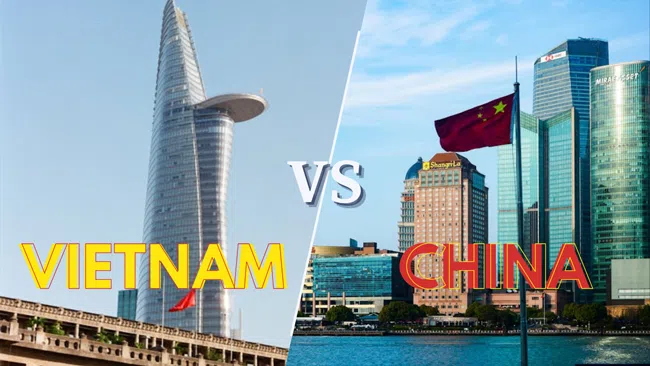
Vietnam vs China Manufacturing: A Detailed Comparison 2026

manufacturing in vietnam vs china

If you’re weighing Vietnam vs China manufacturing for your next sourcing decision, you’re at the right place.

Rising US tariffs on Chinese goods, growing supply chain risk, and Vietnam’s expanding industrial capability have pushed more and more companies to reassess their sourcing strategies, looking at alternatives to China for their manufacturing needs. But the answer isn’t simply move everything to Vietnam. Both markets have real strengths.

In this guide, we will give you a clear, data-backed manufacturing in Vietnam vs China comparison across labor costs, manufacturing capability, product quality, logistics, and trade agreements.

1. Vietnam vs China: Labor Costs

When China manufacturing moves to Vietnam, cost is at the first tier of the list. Monthly minimum wages in both countries are increasing steadily. Here’s where they stand as of 2026.

China:

China’s minimum wages are set at the provincial and city level, updated periodically by local governments. The latest figures, announced by China’s Ministry of Human Resources and Social Security in January 2026:

  • Highest: RMB 2,740/month (appro. USD $403) in Shanghai
  • Lowest: RMB 1,750/month (appro. USD $257) in some areas of Guangdong
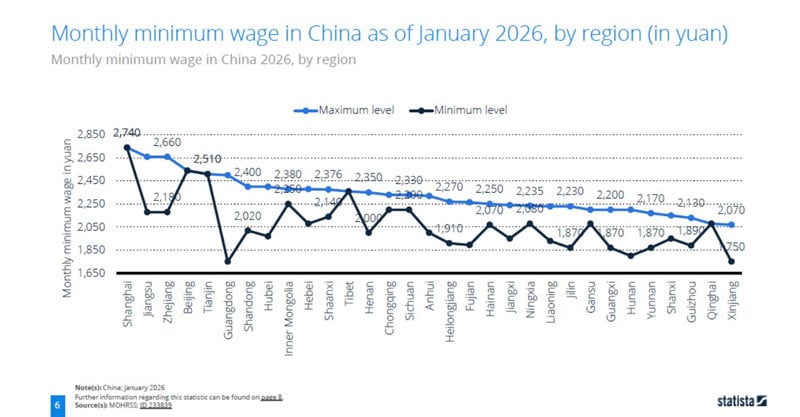

china monthly minimum wages 2026

Vietnam:

Vietnam sets minimum wages by four geographic regions via government decree. Effective 2026, wages increased approximately 7% from 2024 levels, the minimum monthly wages in Vietnam are from 3,700,000 VND (USD$140) to 5,310,000 VND (USD$202).

Vietnam’s 2026 monthly minimum wages:

  • Region I: VND 5,310,000 per month (appro. $202 USD)
  • Region II: VND 4,730,000 per month (appro. $180 USD)
  • Region III: VND 4,140,000 per month (appro. $157 USD)
  • Region IV: VND 3,700,000 per month (appro. $140 USD)


Beyond labor costs, overall manufacturing cost includes indirect costs, such as materials, energy, rent, and taxes. Electricity rates in Vietnam run around $0.078/kWh vs China’s $0.108/kWh, a modest saving, but one offset by grid reliability concerns in some northern regions.

The wage gap has a huge impact for labor-intensive production in industries like apparel, furniture assembly, footwear, and consumer goods, where labor represents a significant share of unit cost.

However, China’s higher wages come with higher productivity, more experienced workforce in complex manufacturing, and integrated supply chains that reduce material costs.

2. Vietnam vs China: Manufacturing Workforce

China’s Labor Force

China is known as the second-largest country in population. According to the 2026 National Population Sample Survey:

  • Total population: 1,405 million in 2025
  • Population aged 1559: approximately 870 million (61.89% of total) in 2025
  • Working-age population (1564, international standard): approximately 968 million (68.9% of total) in 2025
  • Employment rate: 6% by end of 2025, per National Bureau of Statistics

China has a larger and more experienced workforce, which gives it a clear advantage for manufacturing processes that require deep technical skills accumulated over decades.

Vietnam’s Labor Force

Vietnam’s workforce is considerably smaller but growing consistently. The country ranks 16th of the largest population:

  • Total population: 101.6 million (2025)
  • Total labor force: approximately 57 million (2025)
  • Labor force participation rate: 5% (2025)

Vietnam’s workforce profile is younger, expanding, and increasingly supported by government investment in vocational and technical training.

For labor-intensive manufacturing categories like furniture, apparel, and consumer goods, the workforce is well-suited and improving.

3. China vs Vietnam: Manufacturing Capabilities

China:

China’s manufacturing position is built on decades of industrial investment, supply chain integration, and production scale that no other market currently replicates.

In 2025, China contributed around 30% of global manufacturing added value, maintaining its position as the world’s largest manufacturing powerhouse for 16 consecutive years. China’s manufacturing strengths include:

  • Cover a wide range of products and are capable of producing sophisticated products
  • Global leadership in electronics, machinery, and high-tech goods
  • Deep, self-sufficient supply chains with minimal dependency on imports for most categories
  • Strong R&D and automation investment, particularly in EVs, batteries, and precision manufacturing
  • Highly developed manufacturing infrastructure built to support massive production volumes

Vietnam:

Vietnam’s manufacturing sector has grown rapidly and now plays a meaningful role in global supply chains.

Manufacturing accounts for over 20% of Vietnam’s GDP and remains the primary engine behind export growth, foreign direct investment, and industrial output. In 2025, Vietnam’s total exports surpassed $470 billion, a record high, with electronics and technology products as the core driver.

Vietnam’s manufacturing strengths include:

  • Rapidly growing manufacturing sector, accounting for over 20% of GDP
  • Strong in traditional industries such as textiles, footwear, and furniture
  • Growing capabilities in electronics, computers, and components
  • Expanding into high-tech manufacturing with investments from major companies
  • Developing supply chains, but still dependent on imports for some materials


However, Vietnam has a structural constraint that the localization rate in sectors such as electronics, automotive, and engineering plastics remains low, estimated at only 15 to 20% as of 2025–2026.

This heavy reliance on imported inputs, often sourced from China or South Korea, exposes Vietnamese manufacturers to higher procurement costs and supply chain volatility.

4. China vs Vietnam: Raw Material Resources

China:

China’s resource base is one of the foundational pillars of its manufacturing dominance. As the world’s fourth-largest country by land area, it holds substantial reserves across a wide range of industrial materials:

  • According to Visual Capitalist, China produces around 90% of the world’s refined rare earth supply
  • Hosts the largest capacity for separation and purification globally
  • World’s largest producer of many minerals and metals
  • Pig iron production reached 72.1 million metric tons in December 2021
  • High degree of self-sufficiency in many raw materials to shorten development and production lead time

Vietnam:

Vietnam’s raw material profile is limited in industrial breadth, but it holds meaningful strengths in specific areas:

  • The world’s third-largest reserves of bauxite.
  • Leading natural rubber producers and exporters
  • The steel industry is growing rapidly, producing over 16 million tons of steel and 5 million tons of iron a year

Many industries in Vietnam depend significantly on imported raw materials, primarily from China, South Korea, and Japan. This import dependency adds procurement cost, extends lead times, and creates exposure to external supply chain disruptions.

5. Made in Vietnam vs Made in China: Product Quality

The “made in Vietnam vs made in China quality” question is one of the most searched comparisons. You may want to know whether products are reliable, consistent, and worth the cost.

The reality is that country of origin alone does not determine product quality. Factory capability, product category, engineering support, and quality control systems matter far more.

China:

China’s biggest advantage is its highly integrated manufacturing ecosystem and mature industrial infrastructure. Over the years, Chinese manufacturing has moved far beyond low-cost production and invested heavily in automation, engineering, and advanced manufacturing capabilities.

Products made in China both low-cost consumer goods and high-end products such as electronics, precision components, machinery, and technically complex items that meet strict international standards.

China’s reputation for “cheap goods” mainly comes from its enormous supplier range. Buyers can find factories at almost every price and quality level, from very basic products to premium manufacturing. This flexibility is one reason China remains the world’s largest manufacturing hub.

Vietnam:

Compared with China, Vietnam’s industrial ecosystem is still developing, and many raw materials and components still depend heavily on Chinese suppliers. Factory automation and upstream manufacturing depth are generally lower than in China.

However, Vietnam has become highly competitive in several export-focused industries, especially textiles, furniture, footwear, and selected consumer electronics.

Years of foreign investment and export manufacturing experience have helped many Vietnamese factories build reliable production quality in these categories. Vietnam works especially well for standardized, labor-intensive products where global companies want lower labor costs and tariff diversification.

For importers, the right manufacturing location depends more on the product category, factory capability, and sourcing strategy than the country itself.

China remains stronger for complex manufacturing, integrated supply chains, and large-scale development support. Vietnam is increasingly attractive for labor-intensive production, diversification, and cost-sensitive sourcing programs.

6. Vietnam vs China: Shipping Logistics

Logistics infrastructure directly affects lead times, shipping costs, and how reliably you can get goods to market. China and Vietnam both have coastal advantages.

Shipping Ports

China:

“China has the world’s largest container port system, with seven of the world’s ten busiest container shipping ports located along China’s coastline—namely the ports of Shanghai, Ningbo-Zhoushan, Guangzhou, Qingdao, Tianjin, Shenzhen, and Hong Kong.” — Research Expert in Statista

According to Global Times:

  • Total cargo throughput:34 billion tons in 2025, up 4.2% year-on-year
  • Total container throughput: 350 million TEUs in 2025, up 6.8% year-on-year


Major ports in China by 2025 performance:

  • Shanghai – handled over 55 million TEUs, remaining the world’s busiest container port for the 16th consecutive year
  • Ningbo-Zhoushan – exceeded 4 billion tons of cargo throughput and over 43 million TEUs, ranking first globally in cargo volume for 17 straight years.
  • Shenzhen – handled over 33 million TEUs of foreign trade containers in 2025.
  • Guangzhou – exceeded 696 million tons of cargo throughput and over 28 million TEUs, ranking among the world’s six major ports.

Vietnam:

Vietnam’s port infrastructure has expanded rapidly alongside its manufacturing growth. Its major ports include Ho Chi Minh City, Hai Phong, Cai Mep, and the port of Ho Chi Minh City is the biggest one, ranking 22nd globally in the Lloyd’s 2025 list.

The 2025 data shows:

  • Total cargo throughput: approximately 1.17 billion tons in 2025, up 12% year-on-year
  • Total container throughput: approximately 34.36 million TEUs in 2025, up 11% year-on-year


Major ports in Vietnam by 2025 performance:

  • Ho Chi Minh City – Cat Lai Terminal processed over 9 million TEUs, the busiest inland container port in Vietnam.
  • Hai Phong – handled 1 million TEUs, up 10% YoY; 4 new deep-water berths added in 2025
  • Cai Mep – handled 7 million TEUs, and achieved one of the world’s top container port performance rankings and is Vietnam’s main deep-water port for large vessels.


Vietnam’s ports are well-positioned to support a fast-growing manufacturing base, particularly for electronics, furniture, apparel, and consumer goods. Vietnam has fewer major gateways than China, which creates a higher dependency on a smaller number of key ports.

Delivery Lead Time

To ship products to the U.S., the delivery lead time from China and Vietnam is close. Below are the delivery times in both countries to the U.S. market:

Methods (ports to ports)China to U.S.Vietnam to U.S.
Full Container Load (FCL)14-35 days21-38 days
Less than Container Load (LCL)14-42 days21-45 days
Air3-10 days5-8 days
Express1-5 days1-4 days

Vietnam vs China Shipping Costs to US

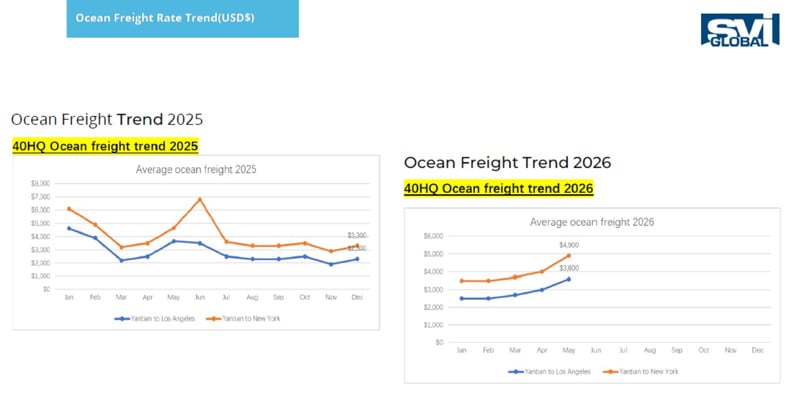
Ocean freight rates from Vietnam and China to the US are broadly comparable. Different routes may offer temporary advantages depending on freight demand, tariffs, congestion, or carrier adjustments, but overall price trends usually move in the same direction.

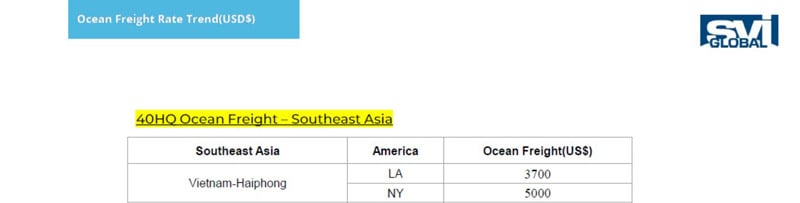
As a general reference, 40HQ container rates from Yantian (Shenzhen) to the US West Coast and US East Coast in recent months have been in the following ranges, and rates from Hai Phong, Vietnam, departing in May 2026 are closely aligned:

  • Yantian to Los Angeles – $3600
  • Yantian to New York – $4900
  • Haiphong to Los Angeles – $3600
  • Haiphong to New York – $5000


svi yantian to us ocean freight may 2026 svi vietnam to us ocean freight may 2026

7. Vietnam vs China: Policy Incentives

To compare manufacturing in China vs Vietnam, both countries offer attractive policy incentives to boost foreign investment and economic growth, particularly in high-tech and manufacturing sectors.

China‘s incentive package is extensive, featuring a range of tax benefits, including reduced Corporate Income Tax rates for high-tech enterprises, substantial investment subsidies, and region-specific incentives.

Vietnam is rapidly evolving its policies to compete on the global stage. The country provides preferential tax rates, VAT reductions, and targeted support for high-tech investments and specific sectors like education and renewable energy.

Vietnam’s recent focus on developing its semiconductor industry through planned tax incentives and increased funding to attract cutting-edge technologies.

8. China vs Vietnam: Trade Agreements

Trade policy is currently one of the most consequential factors in the Vietnam vs China manufacturing decision, and also the most volatile. Here’s where both markets stand as of mid-2026.

China’s Trade Agreement Network

China is a member of RCEP, the Regional Comprehensive Economic Partnership covering 15 Asia-Pacific nations, and has bilateral agreements across much of Asia, including ACFTA (ASEAN-China FTA), agreements with South Korea, Australia, New Zealand, and others.

China’s FTA network is extensive within Asia, but it lacks the preferential access to US and EU markets that Vietnam enjoys through EVFTA and CPTPP. For brands selling into those markets, this is a tangible disadvantage — and one that compounds the current tariff exposure.

Vietnam’s Trade Agreement Network

Vietnam has 17 free trade agreements in effect, giving it one of the most strategically positioned FTA networks among emerging manufacturing economies. Key agreements:

  • EVFTA (EU-Vietnam FTA) – Eliminates over 99% of customs duties between Vietnam and the EU over a phased timeline.
  • CPTPP – Vietnamese goods can access these markets at zero or near-zero tariff rates.
  • RCEP – Shared with China; covers 15 Asia-Pacific nations


Vietnam has broader zero-tariff access to US, EU, and Asia-Pacific markets than China through its newer-generation FTA network. For brands building an alternative production base to China, this FTA coverage is one of Vietnam’s most durable structural advantages.

US Tariff Exposure: China vs Vietnam

Exporting goods from Asia to the U.S. has become more difficult due to rising tariffs from the ongoing conflict between them.

China

The US-China tariff situation remains elevated and complex. Following the May 2025 Geneva framework agreement between the US and China, 24% of tariffs were suspended through August 2025, bringing the effective rate down to approximately 30% during the suspension window. However, the suspension is temporary; companies should monitor developments closely, as the tariff structure is subject to change before the end of 2026.

Vietnam

On October 26, 2025, the US and Vietnam reached a bilateral trade framework agreement. Under the terms:

  • Vietnam committed to zero-tariff market access for nearly all US agricultural and industrial products, recognition of US vehicle safety and environmental standards, and streamlined import procedures for pharmaceuticals and medical devices
  • The US agreed to maintain a 20% baseline reciprocal tariff on Vietnamese goods, with certain product categories (specific agricultural and industrial goods) qualifying for 0% reciprocal rates


This framework gives companies sourcing from Vietnam significantly more tariff certainty than China currently offers. A 20% effective rate vs China’s 55% (or 30% during suspension) represents a meaningful landed cost difference across most product categories.

The situation remains subject to negotiation and political developments; we should build tariff scenarios into their cost models rather than assuming current rates are permanent.

Vietnam vs China Manufacturing: Which Is Right for Your Product?

There is no single winner in the Vietnam vs China manufacturing debate. The right choice depends on your product category, cost structure, quality expectations, lead time requirements, and long-term sourcing strategy.

China remains the stronger option for complex manufacturing, mature supply chains, engineering support, and large-scale production. Vietnam offers advantages in labor-intensive industries, supply chain diversification, and tariff positioning, especially for U.S.-focused buyers.

For many importers, the best solution is no longer choosing one country over the other. It is building a balanced China+1 diversification strategy to utilize the strengths of each country and reduce risks.

Conclusion

While China remains a dominant force in global manufacturing, the shifting dynamics of the global market and the need for supply chain diversity have made Southeast Asia, particularly Vietnam, an increasingly attractive alternative. Vietnam’s proximity to China, coupled with its competitive labor costs, growing manufacturing capacity, and favorable business environment, position it as an ideal “China+1” option for companies seeking to mitigate risk.

However, moving manufacturing from China to Vietnam requires careful consideration of various factors.

Whether you’re sourcing from China or Vietnam, you’ll inevitably run into pitfalls you don’t understand. At SVI Global, we offer comprehensive sourcing services to help navigate these obstacles. With offices in both countries, we have in-depth knowledge of the local industries and market trends. Our on-the-ground presence allows us to assist you in sourcing directly from the region, visiting factories, and managing the entire sourcing process. Contact us today!

Table of contents

Related Blog
Get in Touch

Send us a message, we’ll get back to you within 24 business hours.

Get a Free Quote Now!

Send us a message, we’ll get back to you within 24 business hours.

Message

Reading Club

The goal of SVl Reading Club is to READ, THINK, and ENJOY. 

Club members will explore a shared classic book each session. Through individual reading, club discussions and sharing of reading inspirations, members will engage in meaningful and thoughtful exchanges of ideas. Cultivating a reading habit will help to promote cognition, enhance your knowledge, and foster flexible thinking.

reading club