Balancing Cost and Quality: What to Cut, What to Keep
- Date:
- Author: SVI Content Team
- Share:
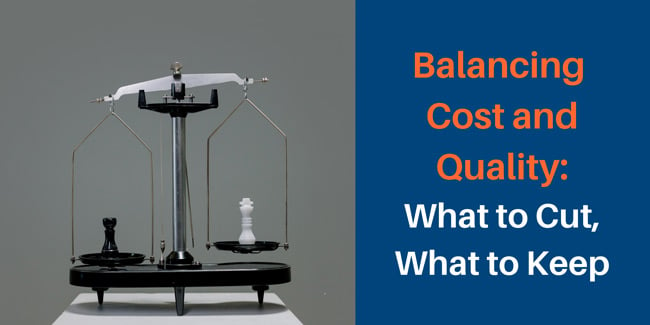
Cost and quality are two key considerations when manufacturing a product, and they are closely connected. A higher cost does not mean better quality, but products with more demanding design, material, and performance requirements usually entail greater investment in manufacturing and quality control.
When taking a new product from development to mass production, you could face pressure to reduce sourcing costs without lowering product quality. What is hard is to know where costs can be optimized and where quality requirements must remain unchanged.
In this guide, we show you how to balance cost and quality throughout sourcing, production, and delivery to meet product requirements without paying for unnecessary costs.
1. Define Non-Negotiable Quality Requirements First
Cost reduction has limits, and those limits are set by product quality requirements. Before discussing ways to lower prices, you need to understand which requirements must remain unchanged and which ones allow room for adjustment.
Cutting costs by sacrificing essential quality can have adverse effects. A product that fails to meet safety, functional requirements, or customer expectations will likely result in rejection, returns, rework, or lost sales. These consequences can cost far more than the initial savings.
The first step is to identify your non-negotiable quality requirements before setting cost targets. The requirements can be separated into three categories:
- Non-negotiable: Requirements that cannot be compromised, such as product safety, regulatory compliance, essential functions, and critical performance standards.
- Optimizable: Requirements that may allow adjustments, such as non-critical dimensions, surface finishes, packaging materials, or unnecessary features.
- Changes needed validation: Requirements involving materials, key components, manufacturing processes, or specifications that could affect product performance and reliability.
You need to make these requirements measurable and as specific as possible. Document the agreed requirements and use these as the common reference for supplier quotations, sample approval, and mass production.
Above all, do not settle for less on safety, compliance, or functional requirements just because of a lower cost target.
2. Evaluate the Costs Beyond Unit Price
Once you have defined your non-negotiable quality requirements, the next step is to evaluate the costs involved in meeting them. A supplier’s unit price is only part of the picture. Tooling, development, quality control, freight, duties, and other expenses can all affect the actual cost of sourcing a product.
The Cost of Quality
In 1956, the concept of cost of quality mentioned by Armand V. Feigenbaum divides quality-related things into four groups:
| Prevention | Stopping defects before they occur | Written specifications, approved samples, supplier audits |
|---|---|---|
| Appraisal | Checking whether requirements are met | Inspections, laboratory tests |
| Internal failure | Defects found before shipment | Scrap, rework, re-inspection, delays |
| External failure | Defects found after delivery | Returns, chargebacks, claims, lost sales |
Reducing prevention or inspection costs may lower expenses in the short term, but it can convert differences into the failure cost that occurs later.
For example, a supplier offering a lower price may use less costly materials or provide fewer quality checks. If this results in frequent rework, rejected batches, or product replacements, the initial savings for sourcing will be offset.
A lower unit price is valuable only when the product still meets your quality requirements and the additional costs do not outweigh the savings.
3. Review Product Specifications and BOM
When a quotation exceeds your target, identify which cost drivers can be changed without affecting critical product requirements. Suppliers often have practical knowledge of materials, manufacturing processes, and production efficiency that you can use to identify savings.
Consider the following opportunities to keep cost and quality balance:
a. Remove Over-Engineering
Look for components or specifications that add cost without providing a clear benefit to product performance or customer experience. Potential cost engineering opportunities include:
- Removing unnecessary parts or duplicated functions.
- Reviewing material grades and thickness requirements.
- Simplifying product construction or assembly.
- Reviewing surface treatments and finishing requirements.
b. Evaluate Alternative Materials and Processes
If you find out that materials or manufacturing processes drive up costs, ask suppliers to propose alternatives with clear cost and performance trade-offs. A different material, production method, or finishing process may offer better cost efficiency, but it must be validated against the same critical quality requirements before approval.
c. Work with Suppliers on Continuous Improvement
For effective cost and quality management, involve suppliers in identifying material savings, process improvements, and production efficiencies. Collaborative cost reduction gives suppliers an incentive to improve operations while maintaining quality, rather than simply cutting costs to meet a price target.
Need Help for Your Sourcing Project?
Let SVI Global find the right suppliers and manage your project.
We guarantee quality and on-time delivery!
4. Match Control Effort to Product and Supplier Risk
Inspection is necessary, but inspection is not free. Excessive inspection adds costs, while insufficient controls push quality defects downstream to the customer, where they return as external failure costs. The right level depends on five factors: product risk, process capability, regulatory requirements, the supplier’s track record, and purchase value.
You can refer to the following, grouped by risk:
| Risk Level | Typical Items | Controls to require |
|---|---|---|
| Low | Standard materials, consumables, and non-critical accessories | Supplier qualification, specification review, proportionate incoming sampling, final inspection |
| Medium | Regular components and finished consumer products | Technical pack, sample approval, initial or during-production inspection, final inspection |
| High | Safety-critical or high-value products | Factory audits, first-article validation, process checks, functional testing, and closer monitoring across the whole production |
| Critical | Regulated, children’s, food-contact, or medical-related products | Required certifications, laboratory testing, traceability, documented approvals, and strict release conditions |
What You Can Apply:
- Keep the process light for low-risk items. Heavy controls on low-value purchases waste the budget that high-risk items need.
- Match the check to the characteristic. Use first-article checks, 100% inspection, or tightened sampling for critical characteristics.
- Do not rely on final inspection alone for high-risk products. Set control points at incoming materials, first article, and mass production.
- Define failed-lot handling in writing. Specify rework, sorting, re-inspection, and release conditions before production starts.
- Start new suppliers with a small trial order and scale gradually.
5. Protect Product Quality Through Packaging and Delivery
Meeting product specifications during manufacturing is only part of the job. A product that leaves the line within specification can still arrive non-conforming if packaging, handling, or transport damages it.
For example, reducing packaging costs may increase the risk of product damage, while choosing a supplier with longer lead times may require you to hold more inventory or pay for expedited shipping to meet delivery deadlines. Then the supplier offering a lower ex-factory price or FOB price may not be that cost-effective.
a. Balance Packaging Protection and Shipping Costs
Packaging must provide sufficient protection without adding unnecessary material or weight. Thinner cartons and less cushioning may reduce unit costs but increase the risk of damage. Oversized or unnecessarily heavy packaging, on the other hand, adds freight costs without providing meaningful protection.
Therefore, choose packaging according to the product, shipping method, and destination. For fragile or high-value products, consider transit testing before approving packaging changes.
b. Plan Inventory Around Demand and Lead Times
A lower unit price tied to a larger minimum order quantity (MOQ) may leave you with excess inventory and tied-up cash. Too little safety stock, however, can lead to stockouts and expensive expedited freight. Set purchasing quantities and inventory buffers based on demand fluctuations and actual production and shipping lead times.
c. Agree on Delivery Responsibilities in Advance
For high-value or seasonal products, clarify who bears the costs of delays, short shipments, product damage, and expedited transportation before orders are placed. Resolving these responsibilities in advance is much easier than negotiating after a disruption occurs.
6. Track Quality Costs and Improve Supplier Performance
Balancing cost and quality is an ongoing process. You should regularly review supplier performance to see whether cost-saving decisions are delivering lasting results without compromising product quality or delivery.
A lower purchase price may appear to reduce costs, but recurring defects, rework, or customer complaints can quickly offset the savings. Tracking quality and delivery performance over time helps you identify these issues and understand where further improvements are needed.
When problems occur repeatedly, work with the supplier to identify the root cause and agree on corrective actions. These may involve adjusting a manufacturing process, improving material control, or providing additional operator training. More importantly, verify that the changes have worked rather than treating the issue as resolved once the supplier submits a corrective action report.
Use these results to guide future sourcing decisions, including supplier selection, order allocation, and price negotiations. Share lessons from past orders with suppliers and incorporate proven improvements into updated product specifications and production requirements.
By building a strong supplier relationship, your supply chain can deliver consistent quality and better cost performance over time.
Wrapping Up
Striking a balance between cost and quality is knowing which quality requirements must hold, where manufacturing costs can come down without touching them, and how much control the final product needs.
This becomes especially important when raw material and production costs are rising. Companies that know where they can optimize—and where they cannot—are better positioned to protect their margins without weakening the product.
The balance is not set once. It starts with the factory you select and continues through production, with ongoing monitoring, supplier collaboration, and improvement. A design that looks right on paper may include requirements that are impractical to produce or push the unit price above target, so it often needs adjusting once real production begins.
SVI Global, as a company that provides supply chain management services, can help you find factories with reasonable pricing and consistent quality, and discover where costs can be cut without lowering quality. Our sourcing, merchandising, cost engineering, and quality management teams will ensure that your sourcing process is seamless.
Start streamlining your sourcing process
We help you to build reliable supply chains across China and SEA.