B2B Sourcing Guide: What You Need to Know About

b2b sourcing

Choosing the right manufacturer for your business is finding the perfect partner who aligns with your company’s standards and goals. This process of connecting one business to another is what B2B sourcing is all about within the supply chain. For entrepreneurs, sourcing goods from businesses ensures access to high-quality products at competitive prices, which is essential for business growth.

To understand what B2B manufacturing sourcing is and how it benefits you, this blog will cover the details and explore more information about different types of B2B sourcing agents and sourcing platforms that can assist you in sourcing globally or specifically from China. Read on!

Part 1. What Is B2B Sourcing?

1) What Is Business-to-Business (B2B) Sourcing?

B2B sourcing refers to the process which one business acquires goods or services from another business. It has a systematic and strategic process for finding, evaluating external suppliers.

Its objective is to obtain the key materials or services needed for sale with the lowest total cost of ownership (TCO), the highest quality, and supply reliability.

Unlike transactions aimed at individual consumers, B2B sourcing involves business-focused suppliers—such as factories, trading companies, wholesalers, or other enterprises—providing products or services specifically tailored to meet your needs.

B2B procurement is to ensure the stability of the supply chain and minimize risks to the greatest extent.

2) B2B Sourcing vs B2C Sourcing: What’s the Difference?

Business to Customer (B2C) Sourcing focuses more on meeting individual consumption or rapid market turnover needs compared to B2B Sourcing. B2C is more inclined to pay attention to the convenience of transactions. Its transaction relationships are generally short-term and transactional, with small transaction volumes and a pursuit of order speed. B2B, on the other hand, represents a long-term and strategic partnership between enterprises and producers, with a greater emphasis on the stability of the relationship.

3) Where do companies commonly source products from?

Companies (especially large enterprises) mainly focus on product procurement in the Asian region and strategically distribute their products among different regions based on their types. Asia accounts for a large share of global manufacturing exports, mainly concentrated in China and a few economies in East and Southeast Asia.

China (despite rising labor costs, it remains the world’s largest exporter of low-cost goods);

Countries such as Vietnam, Thailand, India and Malaysia are among the top purchasers of low-value goods due to their relatively low labor costs and favorable trade policies.

For precision and high-tech content products, procurement is mainly concentrated in countries with strong R&D capabilities and advanced manufacturing processes, such as China, South Korea, Japan, etc.

4) Why Focus on Manufacturers When Sourcing Goods?

  • Cost Efficiency
    By procuring goods directly from manufacturers or factories, businesses can access more competitive pricing. Larger orders typically qualify for discounted rates or more favorable terms, which helps organizations maximize their budgets and improve profit margins.
  • Better Quality Control
    When sourcing directly from manufacturers, businesses have more oversight and control over product quality and production processes. Working closely with factories allows for easier implementation of adjustments and improvements, ensuring products meet precise specifications.
  •  Specialized Solutions
    Manufacturers in particular industries are often adept at creating customized products tailored to specific business needs. This specialized expertise can address unique challenges in ways that generic retail goods cannot.
  • Long-Term Partnerships
    Sourcing from reliable manufacturers lays the groundwork for ongoing collaboration. A strong supplier relationship management can lead to priority access to products, faster turnaround times, and flexible terms—ultimately benefiting a business’s operational efficiency and growth.

    Long-term cooperative relationships can also prevent production disruptions, ensure the operation of the supply chain, and reduce risks.

Part 2. Popular Online B2B Sourcing Platforms in China

China is one of the largest manufacturing hubs for global sourcing thanks to its competitive prices, extensive product categories and suppliers, and robust infrastructure. The following is a list of B2B platforms where you can find Chinese factories.

1) Alibaba

Alibaba is one of the largest global B2B sourcing platforms for buyers to seek products and suppliers on a global scope. With the number of Chinese suppliers topping the list, it offers a wide range of products.
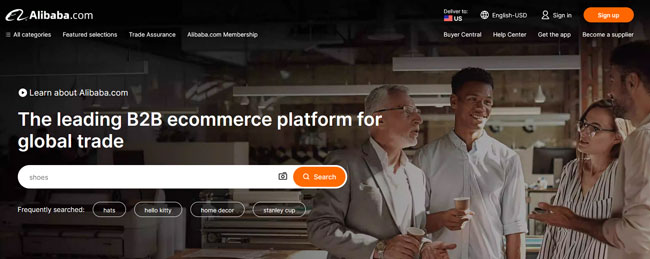
alibaba b2b sourcing platform

Key Features:

  • Largest collection of product categories and suppliers worldwide
  • Supplier verification
  • trade assurance for secure transactions
  • Multiple payment methods
  • Flexible minimum order quantities (MOQ)

2) Made-In-China

Made-in-China is a major B2B sourcing platform focused solely on Chinese suppliers. By searching what products you source, buyers can find manufacturers in 27 industries and directly request quotes from suppliers.
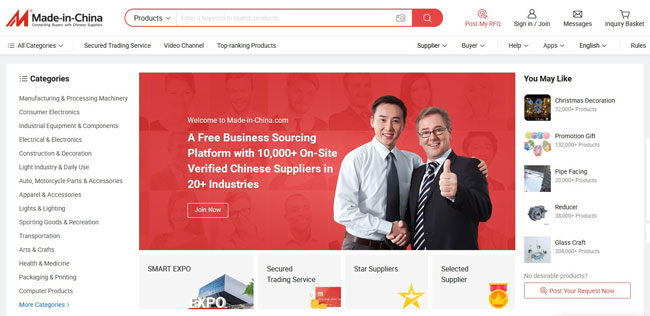
made in china b2b sourcing websites

Key Features:

  • Focus on providing verified Chinese suppliers, not products
  • Post RFQs (Requests for Quotes) for suppliers to respond to
  • Multiple payment methods and trade protection
  • Low minimum order quantities (MOQ)

3) Global Sources

Global Sources connects companies with verified suppliers globally, but primarily in China and Asia. Companies can submit RFQs and chat with vendors directly. Besides being a top B2B sourcing platform, it also hosts trade shows in different regions facilitate face-to-face meetings with suppliers.
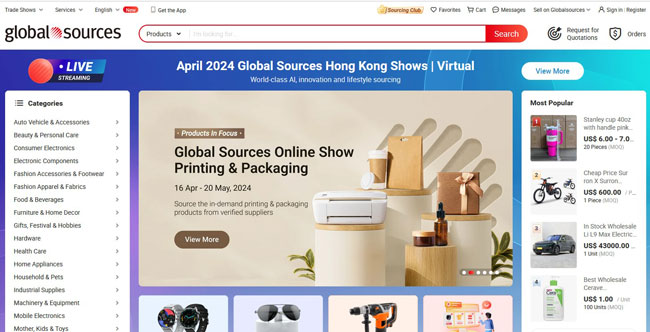
global sources global b2b sourcing platform

Key Features:

  • Extensive database of suppliers and high-quality products
  • Supplier verification and quality control checks
  • Regular trade shows and exhibitions for face-to-face meetings

4) 1688.com

1688.com is a Chinese domestic B2B sourcing platform owned by Alibaba Group, primarily catering to the Chinese market. it is increasingly being used by international buyers to access Chinese suppliers at lower prices.
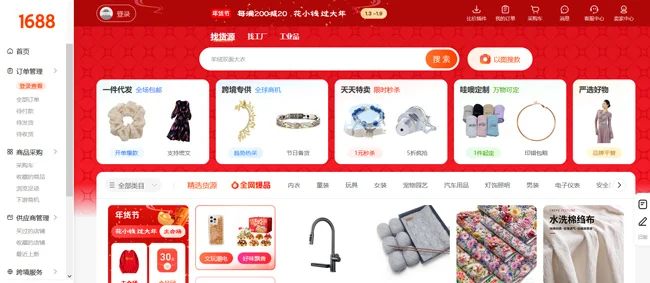
1688 china b2b sourcing website

Key Features:

  • Access to a massive number of Chinese products and suppliers
  • Focus on domestic Chinese transactions, often at lower prices compared to Alibaba

Browsing the Chinese website may cause reading difficulties as it is primarily geared towards the Chinese market. In addition, suppliers may not have international manpower and shipping experience. Therefore, if you are an international buyer, you need the help of 1688 agent service to help you solve the language barrier and shipping obstacles.

5) HKTDC (Hong Kong Trade Development Council)

HKTDC is one of the B2B sourcing websites for seeking manufacturers from China, particularly in Hong Kong and surrounding regions. It also focuses on offering trade fairs and sourcing guides.
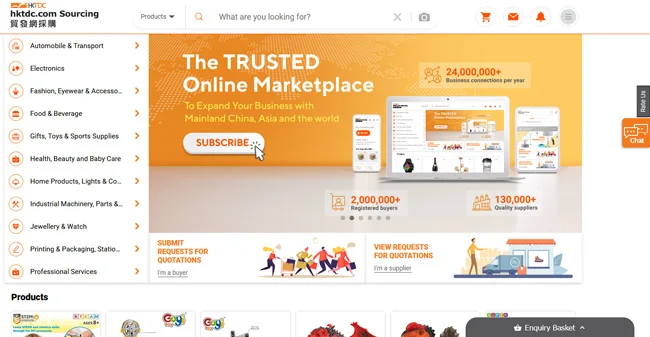
hktdc global b2b sourcing platform

Key Features:

  • Trusted supplier directory
  • Sourcing fairs and networking opportunities
  • Have levels of suppliers’ credibility and engagement

6) Canton Fair Online Exhibition

The Canton Fair (China Import and Export Fair) is one of the largest trade fairs in China. It has an online platform that allows global buyers to connect with suppliers directly without attending fairs offline.
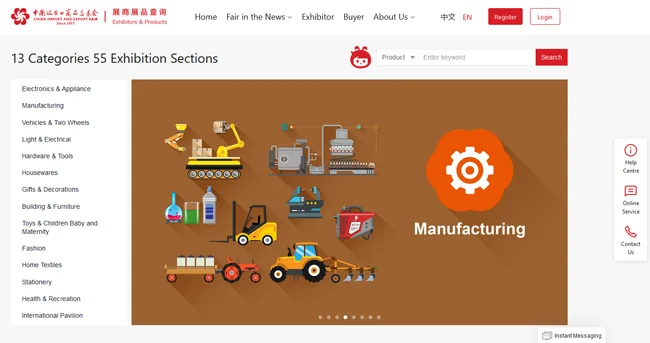
canton fair online exhibition

Key Features:

  • Access to a vast range of product categories
  • Ability to connect directly with verified suppliers and manufacturers
  • Virtual trade fair experience with supplier profiles, product videos, and live interactions
  • Industry-specific matchmaking services
Part 3. Why B2B Sourcing Agents are Essential

Sourcing agents can be seen as assistants in your sourcing process. They help companies find the right suppliers and communicate with manufacturers to complete orders. Having them involved makes the sourcing process easier and time-saving when you’re pressed for time or unfamiliar with the industry.

1) When Companies Should Use an Agent

  • No local expertise to handle language barriers, supplier communication, trade regulations, or customs and logistics challenges.
  • Limited resources or time pressure to manage procurement while balancing core business operations.
  • Sourcing across fragmented categories, factories or regions, especially when products require complex coordination or high levels of customization.
  • Need for deeper vetting, including broad supplier networks, on-site factory audits, and background checks.
  • Start with small MOQs, where factories may reject low-volume buyers, but agents can negotiate flexibility and manage freight consolidation.

2) Types of Sourcin Agents in B2B Sourcing

When finding sourcing agents, there are different types of them with distinct roles in B2B sourcing.

a. Independent Sourcing Agents

Independent sourcing agents usually work as freelancers or consultants. You may find these experts on platforms like Fiverr, or Upwork.

⭕ Pros: Flexible, cost-effective, personalized service

❌ Cons: May lack larger networks or full-service capabilities

b. Specialized Sourcing Agents

The industry-specific sourcing agents focus on particular industries or product categories (e.g., electronics, textiles).

⭕ Pros: Expert knowledge of specific products, better negotiation power in niche markets

❌ Cons: Limited flexibility and scope for sourcing across diverse product categories

c. Local Sourcing Agents

The local sourcing agents work directly for specific manufacturers in certain regions. They focus on finding factories within a region that specialize in certain products, but are not limited to product categories.

⭕ Pros: Understanding of local markets, regulations, and supplier capabilities, better factory inspections and product checks

❌ Cons: Limited supplier options

d. Supply Chain Management Firms

The supply chain management companies are established companies that provide comprehensive supply chain solutions to businesses that look to outsource the sourcing process.

⭕ Pros: Professional networks, scalability, end-to-end sourcing solutions

❌ Cons: Higher fees

SVI Global is the perfect example of a supply chain management company. We offer an end-to-end sourcing service from selecting suppliers and product development to quality assurance and production management. Our global presence makes it easy to connect with you and fulfil your unique demands, no matter where you want to source from Asia or Mexico.

Our streamlined processes ensure that your orders are delivered on time and meet the highest standards of quality and efficiency. With SVI Global, you can trust that every aspect of your supply chain is professionally managed with us taking care of your process.

3) How B2B Sourcing Agents Help:

a. Supplier Vetting

They use their network and experience to spot reliable suppliers. They check each factory’s background, financial stability, and manufacturing capability so you don’t waste time on unqualified vendors.

b. Product Development

Sourcing agents often assist in refining product designs, identifying appropriate materials, and coordinating with manufacturers to produce prototypes. By bridging communication between you and factories, they help ensure your product specifications are met accurately during development.

c. Cost Analysis

Before orders are placed, sourcing agents assess various cost drivers—such as raw material expenses, labor costs, and market conditions—to provide a complete cost breakdown. This gives you a clear budget and helps you compare options so you can choose the most cost-effective plan.

d. Negotiation

When MOQ or terms are not consilient, a sourcing company helps you negotiate product pricing, payment terms, and lead time to secure better deals and more reliable delivery schedules.

e. Production Management & Quality Control

Throughout the production process, sourcing agents maintain oversight and implement quality checkpoints. They coordinate pre-shipment inspections, testing, and compliance checks to verify that products meet your specifications—helping you avoid costly quality issues and ensure high-quality outputs.

f. Logistics & Compliance Support

From arranging shipping to managing customs, they guide you through each step so your goods move smoothly through customs and comply with the laws of both the exporting and importing countries.

FAQ about B2B Sourcing

Q1. Is it always cheaper to source directly from the manufacturer?

Not always. Buying directly from a factory can lower unit costs because you avoid middle-layer pricing and sourcing fees. But direct sourcing only pays off if you have a capable team that can manage the entire workflow from supplier vetting to production follow-ups and final delivery.

Without that support, the management load and hidden risks can outweigh the savings.

Working with an indirect sourcing agent has its pros and cons too. A good agent handles the process for you, solves issues quickly, and saves time and effort. If you’re unsure whether you need one, check Part 2 to see if your situation fits the typical scenarios.

Q2. What are the most common mistakes in B2B product sourcing?

  • Vet suppliers based only on low price
  • Skip factory audits
  • Vague product requirements in specs, quality, and delivery time
  • Not understanding the MOQ rules
  • Weak contracts with loose protections
  • No quality control checkpoints
  • No cost breakdown analysis
  • Rely on a single supplier
  • Ignore indirect procurement

Q3. How to optimize the B2B sourcing process?

  • Utilize automated tools for workflow and cost analysis
  • Track supplier performance with clear KPIs
  • Review and optimize cost structure for long-term value
  • Standardize sourcing steps and documentation
  • Build a backup or plan for supply chain disruptions
  • Invest resources to maintain long-term relationships with core suppliers
  • Utilize flexible and strategic payment to optimize the company’s cash flow

Conclusion

B2B sourcing is an essential model in the global supply chain that promotes transactions. Looking for businesses is demanding work at the beginning, however, advances in technology make it easier to search for potential suppliers online.

In this blog, we’ve listed out the top B2B sourcing websites where you can unearth manufacturers from China. Be clear about your sourcing requirements and verify suppliers carefully. You can learn to build an effective sourcing strategy to optimize the process and reduce risks.

Additionally, you may leverage sourcing agents that offer expertise to handle complex tasks such as supplier verification and negotiations. SVI Global is at your service.

Table of contents

Related Blog
Get in Touch

Send us a message, we’ll get back to you within 24 business hours.

Get a Free Quote Now!

Send us a message, we’ll get back to you within 24 business hours.

Message

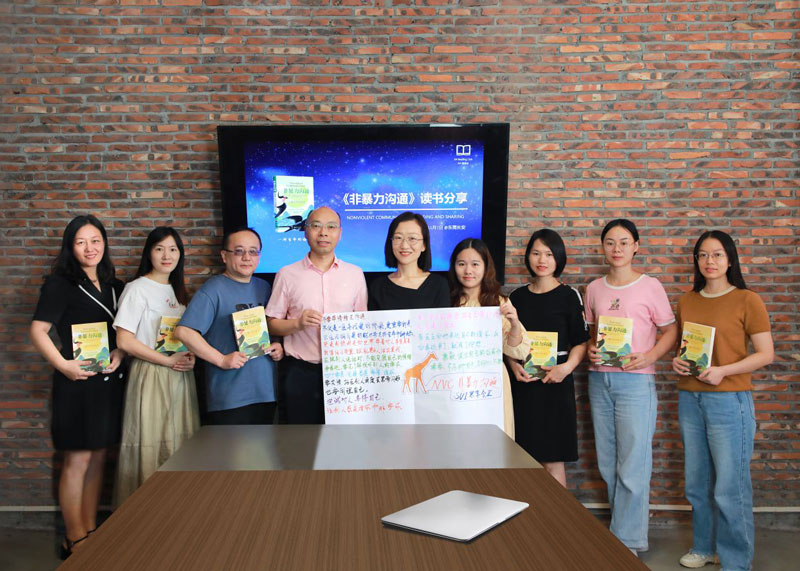
Reading Club

The goal of SVl Reading Club is to READ, THINK, and ENJOY. 

Club members will explore a shared classic book each session. Through individual reading, club discussions and sharing of reading inspirations, members will engage in meaningful and thoughtful exchanges of ideas. Cultivating a reading habit will help to promote cognition, enhance your knowledge, and foster flexible thinking.

reading club