Types of Shirt Printing: How to Choose the Right One
- Date:
- Author: SVI Content Team
- Share:
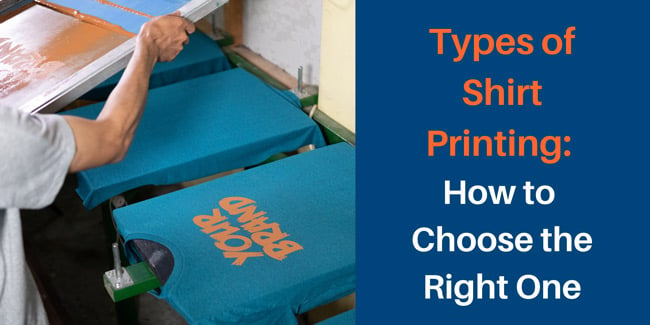
The different specificities of various garments have an impact on which printing process to adopt. For T-shirts or shirts, factors such as design complexity, fabric selection, color choice and quality all need to be taken into consideration.
This guide breaks down all the major types of shirt printing and provides you with a comparative framework based on how they work, so that you can make the right choice according to your specific situation.
Main Types of Printing on T-Shirts
T-shirt printing methods fall into three broad categories based on how the design is applied: screen-based printing, digital printing, and transfer printing.
1. Screen Printing
Screen printing (silk screen printing) is the most widely used garment printing type. It accounts for over half of the global B2B apparel printing market because it delivers vibrant colors, excellent durability, and the lowest unit cost for high-volume orders.
A separate mesh screen is created for each color in the design. Ink is pushed through each screen onto the fabric using a squeegee, with colors printed one at a time. The result is a thick, opaque ink layer that offers strong color coverage and long-lasting performance.
When to Use Screen Printing
- Medium to large production runs where setup costs can be spread across many units.
- Simple artwork with 1 to 6 solid colors; more colors, more complicated and expensive.
- Designs that require high color accuracy and long-lasting prints.
Fabric:
Cotton or cotton blends (the best), polyester, and canvas fabrics
⭕ Pros:
- Good durability and wash resistance
- Vibrant, opaque colors
- Cost-effective for large orders
- Works well on both light and dark fabrics
❌ Cons:
- Expensive setup for small runs
- Setup cost increases with color count
- Not ideal for photographic or complex gradients without advanced techniques
Common Screen Printing Variations
With the evolution of screen printing technology from manual to automated, there have been various specialty finishes developed to achieve different presentation effects, such as 3D, temperature sensing, and light sensing.
- Plastisol ink: Used in the majority of commercial screen printing. High opacity, excellent color coverage, and durable. Suitable for most fabrics; Ideal for dark garments; Thick pattern hand feel.
- Water ink: Ink penetrates the fabric fibers rather than sitting on top. Soft, breathable finish with lower environmental impact; best on light fabrics.
- Discharge printing: Uses a chemical agent to remove the existing dye and replace it with pigment. It creates a soft print with no noticeable ink layer. What might need to be considered are environmental protection and odor issues.
- High density printing: Build multiple ink layers for a raised, three-dimensional surface texture.
- Puff printing: Heat-activated ink expands to create a soft, embossed effect.
- Metallic/Foil printing: Achieved by superimposing metallic inks or heat-applied foil on top of screen printing to create the reflective, high-impact visual effects.
- Simulated process (highest-skill): Uses halftones to reproduce detailed, near-photographic images on dark garments.
2. Direct-to-Garment (DTG) Printing
Direct-to-garment printing is one of the main digital garment-printing methods. It uses inkjet technology to print water-based textile ink directly onto a finished garment, similar to how a desktop inkjet printer applies ink to paper.
Unlike screen printing, DTG does not require screens or a separate setup for each spot color. This makes it particularly suitable for small batches, customized products, complex artwork and photo-realistic designs. However, production is slower and the cost per unit is less economical as order quantities increase.
When to Use DTG Printing
- Small-batch production and print-on-demand orders
- Complex, multi-color or photographic designs
- Products that require soft, detailed prints without a transfer film
Fabric:
Cotton (the best), cotton-polyester blends
⭕ Pros:
- Low or no print setup cost
- Unlimited colors at no extra cost
- Excellent detail, gradients, and photographic reproduction
- Soft hand feel when properly cured
- Ideal for design testing and short production runs
❌ Cons:
- Dark fabrics require a white underbase layer, which adds cost and affects color
- Only performs best on cotton and cotton-rich fabric
- Slower production since garments are printed individually
- Higher unit cost at scale
- Less durable than screen printing after repeated washing
3. Direct-to-Film (DTF) Printing
DTF prints a design onto PET film, which is then coated with hot-melt adhesive powder, cured, and heat-pressed onto the finished garment.
It does not require the ink to be absorbed directly into the fabric. This makes it compatible with a wider range of materials, including cotton, polyester, blends, nylon and other heat-pressable fabrics.
When to Use DTF Printing
- Small- to medium-volume production
- Multiple designs with low quantities per design
- Custom apparel and on-demand printing
- Printing on non-pure cotton or blended fabrics
- Printing detailed artwork with rich and complex colors
Fabric:
Cotton, polyester, blends, leather, and synthetic fabrics all accept DTF transfers effectively.
⭕ Pros:
- Compatible with a wide range of fabrics
- Unlimited colors with excellent detail and gradients
- No screens or color separation required
- Durable prints with good wash resistance
❌ Cons:
- Higher equipment and consumable costs
- Large print areas are less breathable and flexible
- Uses transfer film and adhesive powder, generating more waste
- Less cost-effective than screen printing for high-volume production
- Improper heat pressing may cause defects
4. Heat Transfer Printing
Traditional heat transfer uses either a vinyl cutter or a paper transfer to apply designs to the final garment under heat and pressure. There are two common approaches:
- Printed transfer: The artwork is printed onto transfer paper or film using ink, toner or another printing system. Then heat-pressed onto the garment. It is ideal for full-color graphics, gradients, photographs, and intricate artwork.
- Cut transfer: The artwork is cut from a colored heat-transfer film (HTV) using a cutting plotter. Excess film is removed before pressing, making this approach suited for text, numbers, names, simple logos, and solid-color graphics.
When to Use Heat Transfer
- Small-batch and one-off production
- Simple designs like personalized text, numbers and logos
- Detailed or full-color designs
- Garments with frequently changing designs
Fabric:
Polyester (the best), cotton, and blends
⭕ Pros:
- Low setup cost, accessible for small operations
- Produces sharp details and clean graphics
- Printed transfers support full-color images and gradients
- Good breathability for smaller print areas
❌ Cons:
- Lower durability after repeated washing
- Large designs can feel thick or plastic-like
5. Sublimation Printing
Sublimation printing uses heat to turn special dye-based inks directly into gas, allowing the dye to penetrate polyester fibers instead of sitting on the fabric surface. Because the image becomes part of the fabric, the print feels soft, remains breathable, and offers excellent wash durability.
However, sublimation only works on polyester or polyester-coated materials. Since the dyes are transparent and contain no white ink, they cannot produce accurate colors on dark fabrics.
When to Use Sublimation
- Sublimation-specific polyester apparel
- All-over graphic designs
- Photo-quality, full-color graphics
- Products requiring a soft, breathable finish
Fabric:
Synthetic fibers, such as 100% polyester (the best), high-polyester blends (65% polyester and above)
⭕ Pros:
- The print is invisible to the touch because it is inside the fabric
- Excellent for all-over printing to cover large areas of fabric
- Excellent color brightness and detail
- Highly durable with excellent wash resistance
- Breathable and lightweight finish
❌ Cons:
- Mainly suitable for polyester or polyester-coated materials
- Best on white or light-colored garments
- Large all-over prints require precise cut-and-sew alignment, increasing production complexity
6. Embroidery
Embroidery is a commonly used garment decoration technique. It involves using colored threads to directly sew a pattern onto the fabric. Typically, the embroidered designs are small and are well suited as decorative accents on shirts.
Computerized embroidery machines create the pattern by following a digital design file and switching between different thread colors as required. The result is a raised, textured appearance that adds a tactile dimension to the garment.
When to Use Embroidery
- Designs on chest logos, sleeve branding
- Designs that require a high-end, long-lasting finish
- Premium apparel and outdoor garments
Fabric:
Cotton, polyester, denim, fleece, canvas, twill, and other medium- to heavyweight fabrics.
⭕ Pros:
- Premium, three-dimensional appearance
- Exceptional durability that won’t crack, peel, or fade like printed graphics
- Ideal for garments that are frequently washed or heavily used
- Suitable for branding with logos
❌ Cons:
- Higher cost for complex designs with more stitches and colors needed
- Limited for fine details, gradients, and photographic artwork
- Large embroidered areas increase cost, weight, and stiffness
- Slow production speed
How to Choose the Right T-Shirt Printing Method
You need to balance your requirements as follows before selecting a printing method.
1) Order Volume
Order quantity should be your core factor in choosing a printing method because it directly affects production cost.
For small batches, DTG, DTF, and heat transfer are usually more economical because they require little setup and have no MOQ or low MOQ requirements. As production volume increases, screen printing becomes more cost-effective since the initial setup cost is spread across more garments.
2) Fabric and Garment Color
Different types of printing on T-shirts or other apparel respond differently. Cotton works best with screen printing and DTG, while polyester is ideal for sublimation. DTF offers the broadest fabric compatibility, making it suitable for cotton, polyester, blends, and many synthetic materials.
Garment color also matters, as dark fabrics often require a white underbase, increasing both production time and cost.
3) Design Complexity & Graphic Performance
Simple logos and solid-color images are ideal for screen printing or heat transfer, while photographs, gradients, and highly detailed artwork are better suited to printing methods such as DTG, DTF, or sublimation. The more colors a screen-printed design contains, the higher the setup cost.
4) Print Feel and Durability
The same design can feel very different depending on the printing method.
If comfort is important, sublimation, DTG, and water-based screen printing provide a softer hand feel. Modern DTF can be much softer than earlier versions, but it still creates a bonded transfer layer on the fabric.
For products that require long-term durability, screen printing, sublimation and embroidery generally offer better resistance to repeated washing and daily wear.
5) Budget
Instead of targeting the lowest cost per unit, it is recommended to consider the total production cost. A method with low setup costs may become expensive for large orders because per-garment costs do not fall as sharply with volume.
While a higher initial investment can reduce the cost per garment at scale. For example, in case of screen printing, setup costs are high but can be spread across a larger quantity.
6) Lead Time
Production speed involves more than just printing. Sampling, artwork approval, setup, quality inspection, and packing all affect delivery time.
Digital printing methods usually allow faster startup for small orders, but print garments individually, so it can become slow for large runs.
Whereas screen printing requires more preparation but offers much higher production efficiency once the run begins.
Ultimately, the best printing method is the one that balances quality, durability, cost, and production efficiency for your specific product.
Common Mistakes When Choosing T-Shirt Printing Types
1) Choosing the wrong printing method for your garment type
For example, sublimation works by bonding dye with polyester, so it will not produce proper results on 100% cotton fabrics.
Similarly, using water-based ink on dark garments without a suitable base layer can lead to poor opacity and weak print results. The printing method must match both the fabric composition and the final appearance you want to achieve.
2) Comparing screen printing and DTG on per-unit cost alone
Screen printing usually has higher setup costs, but these costs become less significant as order volume increases. DTG printing requires little setup and is often more cost-effective for small orders with detailed designs, while screen printing typically becomes the better choice for larger quantities with simpler artwork.
The right comparison should consider the total production cost, not just the price per piece.
3) Placing a bulk order without a wash test
Print durability is the major complaint in custom t-shirts. Before placing a large order, always test the final printed sample and check durability through multiple wash cycles to confirm that the print quality meets expectations.
4) Not specifying ink type for screen printing
Plastisol and water-based inks produce different results in hand feel, environmental impact, and long-term appearance. If these factors are important for your brand, the ink type should be clearly stated in the purchase order rather than left to the supplier’s standard process.
5) Skipping pre-production samples
A digital mockup only shows how the design looks, not how the actual print performs on the garment. Different printing techniques, inks, and fabrics can produce very different results.
Some also use digital printing approaches to see the image performance on the garment and then approve the new product. But if the order applies another printing technique, then that’s a totally different thing.
6) Expecting screen prints to match screen colors 100%
A HEX color displayed digitally may change due to fabric type, ink characteristics, printing process, and curing conditions.
For more accurate color control, use Pantone Matching System (PMS) references when possible and approve physical samples before production. Some colors, such as neon shades or deep blacks, may require additional adjustment to achieve a close match across different fabrics.
Conclusion
There are various types of printing on shirts and T-shirts. Each technique has its own advantages and limitations, and understanding these differences can help you avoid quality issues and unnecessary costs.
The clearer you are about your product requirements, the easier it becomes to achieve the right result. While a factory can provide technical guidance, having a basic understanding of the process allows you to make better decisions and communicate your expectations more effectively. No matter which method you choose, always test samples and confirm print performance before moving into bulk production.
If you are sourcing apparel from Asia and need support with supplier evaluation, print quality control, or production management, SVI Global can help at every stage — from reviewing designs and estimating costs to recommending suitable suppliers.
Start streamlining your sourcing process
We help you to build reliable supply chains across China and SEA.