What Is Social Compliance Audit? The Complete Guide
- Date:
- Author: SVI Content Team
- Share:
When you source products from overseas countries like China, Vietnam, Thailand, etc., you rely on factories to uphold labor and ethical standards that can affect your brand and legal standing. The challenge is that many problems inside a factory, such as excessive overtime, unsafe conditions, or labor violations, are not visible unless they are formally checked.
A single issue in your supply chain can lead to retailer penalties, regulatory investigations, or long-term brand damage. At the same time, major retailers are tightening supply chain compliance requirements.
Social compliance audits are essential in conducting inspections. In doing this, it helps reduce the chance of labor or ethical violations.
In this guide, you’ll learn what a social compliance audit is, why it matters, what it checks, how the process works, and which standards you should use before working with suppliers.
Part 1. What Is a Social Compliance Audit
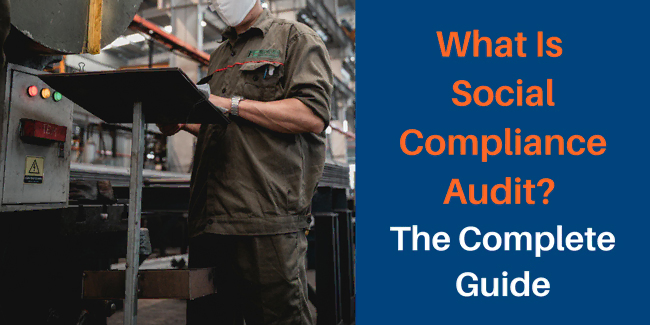
A social compliance audit (ethical audit or social audit) is a formal and independent assessment of a supplier’s factory to verify whether its operations follow applicable labor laws, international ethical standards, and the company’s own code of conduct.
It is an on-site inspection conducted by trained and accredited third-party auditors. These auditors visit the factory, have direct conversations with workers, and examine records to build an objective view of actual working conditions.
Social compliance audits are requested by international buyers or retailers who want to ensure that their overseas manufacturing partners are operating in an ethical and legal manner.
Part 2. Why Social Compliance Audits Are Necessary
The Real Urge
a. Retailer & Firm Requirements
For many international retailers, social audits are imperative for verifying that suppliers meet required ethical and labor standards. Companies such as Walmart, Costco, Disney, Target, and others, all require suppliers to pass recognized social audits before products can appear on their shelves.
Otherwise, there would be no chance for them to work with major retailers or access higher-standard international markets.
b. ESG and Investor Pressure
The performance of the company concerning labor relations in the supply chain can be responsible for up to 30% of the firm’s ESG score. For businesses that rely on institutional investors or public markets, a weak ESG profile creates tangible financial risk.
Consumer studies have revealed that 86% of people expect companies to take accountability for social and environmental issues across the supply chain. Thanks to social media platforms, consumers is able to investigate, publicize, and amplify supply chain misconduct.
Social compliance audit reports provide third-party verification that factories meet recognized labor and ethical standards, supporting ESG reporting and customer trust.
c. Legal and Regulatory Risk
Many markets also set the legal accountability to prevent unethical conditions in supply chains.
The U.S. prohibits imports linked to forced labor in high-risk regions. The EU requires companies above a certain size to identify, prevent, and address human rights and environmental risks across their supply chains, with significant sanctions for non-compliance. Canada also enforces mandatory reporting on the use of forced and child labor in global sourcing.
In addition to trade regulations, financial institutions and investors are increasingly factoring supply chain labor compliance into their due diligence. It is abundantly clear that expectations are increasing, and so too is the cost of non-compliance.
Benefits of Having a Factory Social Compliance Audit
A social compliance audit ensures factories meet labor, safety, and ethical standards. It includes:
a. Lower risk
Avoid legal issues, import restrictions, and reputational damage.
b. More stable production
Better labor conditions lead to lower turnover, fewer disruptions, and more consistent quality.
c. Better sustainability performance
Encourage reduced environmental impact through responsible factory practices.
d. Reduce sourcing costs over time
Minimize the need to replace suppliers due to labor or quality instability.
e. Stronger ESG reporting
Provide verified data for sustainability reports, investor updates, and customer communication.
Part 3. What Does a Social Compliance Audit Cover?
What It Covers
While audit standards could differ, in general, most assessments focus on the following core compliance principles:
- Labor rights: Working hours, overtime, wage compliance, freedom of association, forced labor, and child labor
- Health and safety: Physical working conditions, fire safety, emergency procedures, protective equipment
- Environmental compliance: Waste management, chemical handling, pollution controls
- Fair working conditions: Anti-harassment, non-discrimination, grievance procedures
- Management systems: Employment documentation, payroll records, HR policies, subcontracting controls
What Causes a Failed Audit
Audit results are categorized into various levels based on the severity of the findings.
a. Zero tolerance (immediate failure)
- Employment of underage workers (below legal minimum age)
- Any form of forced labor, debt bondage, or restriction on a worker’s freedom to leave employment
- Deliberate falsification of documents
- Blocking or interfering with the audit
b. Major non-conformities (urgent correction required)
- Systematic working hours significantly exceeding the legal limit
- Wages consistently below the statutory minimum wage
- Unsafe working conditions or missing fire safety
- Withholding worker documents or intimidation
c. Minor non-conformities (needs correction)
- Incomplete or inconsistent record-keeping
- Insufficient safety signage or labeling
- Missing training documentation
- Small gaps in environmental paperwork
Part 4. How to Conduct a Social Compliance Audit Step by Step
Step 1: Define Scope and Choose a Framework
Choose the right audit standard based on your or market’s demands, such as SMETA, SA8000, or BSCI. In addition, determine whether you need an initial audit, follow-up audit, or a focused review on specific risks.
Step 2: Select an Accredited Audit Company
Work with an accredited audit provider experienced in your industry and sourcing region. APSCA-certified auditors are commonly preferred for social compliance audits.
Step 3: Prepare factory documents
For announced or semi-announced audits, factories should organize key records before the audit, including payroll, attendance logs, employment contracts, safety records, and environmental permits.
Step 4: Arrival at the Factory
Audits should be unannounced or semi-announced to reflect actual operating conditions. Factories that resist surprise visits or demand extended advance notice are a compliance risk in themselves.
Step 5: Opening Meeting with Management
Auditors meet with factory management to explain the scope, standards being applied, and what access is required. This ensures cooperation from key personnel and sets clear expectations for how the day will proceed before any quality inspection begins.
Step 6: Perform the factory walkthrough
Auditors physically inspect production floors, warehouses, canteens, and dormitories where applicable. They look for blocked fire exits, unsafe equipment, inadequate ventilation, and visible discrepancies.
Step 7: Review documents and records
Auditors cross-check wage records, attendance logs, employment contracts, safety training certificates, and environmental permits to find any non-compliance.
Step 8: Conduct worker interviews
Interviews are conducted privately, without management present, with a representative sample of workers across different roles, genders, and contract types. Workers are asked about actual hours worked, wage calculation, freedom to raise complaints, and any pressure or mistreatment experienced. Responses are cross-referenced with documentation findings.
Step 9: Closing Meeting with Management
Auditors present preliminary findings to factory management, covering all non-conformities identified, documentation gaps, and CAP requirements.
Management has the opportunity to provide additional context or clarifying documentation before the formal report is finalized.
Step 10: Closing Meeting with Workers and Report Preparation
A formal audit report is then prepared documenting all findings, evidence, and non-conformity classifications serving as the official record for the buyer and any relevant retail compliance platform.
If issues are found, the factory completes a Corrective Action Plan (CAP), followed by verification or re-audits where required.
FAQ about Social Compliance Audit
Q. How often should a social compliance audit be conducted?
Most suppliers should be audited every 1 to 2 years, depending on risk level.
- New suppliers should be audited before or shortly after the first order.
- High-risk factories, suppliers with past violations.
- Those producing for major retailers typically require annual audits.
- Follow-up audits are conducted after major corrective actions to verify improvements.
You should not treat audits as a fixed schedule only. Any major changes may require an additional audit outside the normal cycle.
Q. What happens if a factory fails a social compliance audit?
The outcome depends on how serious the findings are.
In case of any zero-tolerance violation, such as forced labor, child labor, or document fraud, we often immediately suspend or terminate the supply relationship with the factory.
For most other issues, the factory must complete a Corrective Action Plan (CAP). This outlines the problem, required corrective actions, individuals involved, deadlines, and verification methods. A follow-up audit is then conducted to confirm whether the issues have been resolved.
If the factory fails to correct the problem, companies will suspend orders or stop working with the supplier.
Q. When to perform a factory social compliance audit?
Social compliance audits should be conducted in the following situations:
- Regular annual or biennial audits;
- Before onboarding a new supplier;
- Before entering a new sourcing market;
- Before supplying major retailers that require compliance approval;
- Following major changes, such as factory expansion, management changes, relocation, etc.;
- Upon receiving complaints or concerns about labor conditions.
Q. Is a social compliance audit necessary if I’m not selling to retailers?
Yes. Social compliance audits are no longer only for large retail suppliers. Regulations increasingly require companies to monitor labor practices across their supply chains.
Many companies expect suppliers to maintain compliance records. After all, unethical practices can damage brand reputation and cause unforeseen consequences regardless of sales channel.
Conducting audits proactively will not only uncover the non-compliant supplier but also minimize costs incurred as a result of late shipments, being rejected by the retailer, or even legal action.
Conclusion
A social compliance audit is one of the most direct and practical approaches to managing your supply chain when sourcing from overseas factories.
It tells you what actually happens inside your supplier’s facilities, which eventually protects your business and ensures factories meet your retail requirements.
By detecting labor, safety, and ethical issues early, you can avoid compliance risks and increase your supplier stability and transparency.
As global regulations and buyer expectations continue to tighten, maintaining strong social compliance standards is becoming a non-negotiable requirement for long-term sourcing success.
If you are sourcing from China or across Asia and want to ensure your suppliers meet the compliance standards your business requires, we can help to identify the right audit framework for your situation and coordinate the audit process across multiple suppliers.
SVI Global’s quality auditors are dedicated to conducting comprehensive factory audits that go beyond local laws and regulations. We ensure that your suppliers meet the specific requirements set by major retailers, such as Target, Walmart, Home Depot, Costco, and more.
With our thorough audits, we cover crucial aspects like social compliance, environmental compliance, factory capability, capacity, security and more.