China Plus One Strategy: What It Is and How-To Guide
- Date:
- Author: SVI Content Team
- Share:
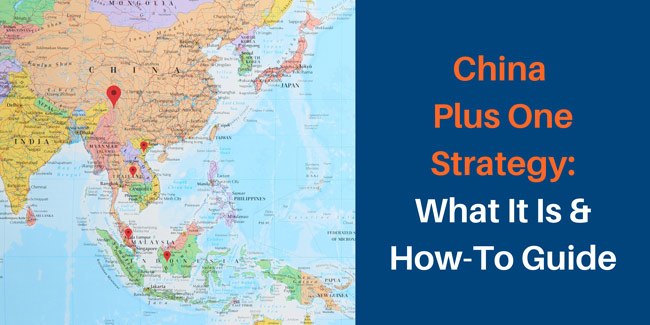
Global supply chains are no longer driven by cost alone. Tariffs on Chinese goods, geopolitical tensions, and disruptions since the pandemic have pushed one question to the top of every sourcing agenda: how much they rely on a single country? Today, sourcing decisions also focus on risk, supply stability, and long-term flexibility.
This shift has led many importers to adopt the China plus one strategy, keeping China as a core manufacturing base while adding production in at least one other country.
This guide explains what the China+1 strategy is, why it matters now, how to evaluate Southeast Asia options, and how to build a practical sourcing plan.
Part 1. What Is the China Plus One Strategy for Supply Chain?
The China plus one strategy (also written as China+1 or C+1) is a supply chain diversification approach where companies keep China as a core part of the supply chain while building secondary or backup production capacity in another country where labor costs, tariff exposure, or policy risk may be different.
The core idea is risk reduction without abandoning China’s advantages. It’s not about replacing China. It’s about ensuring that no single country becomes a single point of failure for your entire supply chain.
What China Plus One Is Not
- It is not a full exit from China
- It is not simply moving the cheapest factory elsewhere
- It is not a one-season experiment that can be reversed quickly
Setting up viable manufacturing in a new country typically takes one to two years, including factory qualification, supplier development, logistics setup, and quality system alignment.
⭕ Pros of the China+1 Strategy
- Reduces tariff exposure and single-country concentration risk
- Strengthens supply chain resilience against geopolitical disruption
- Provides backup production capacity when one location faces constraints
- Can open access to favorable trade agreements in the new country
- Supports country-of-origin diversification for compliance purposes
❌ Cons & Challenges of the China+1 Strategy
- Higher setup investment in factory qualification and supplier development
- New countries rarely have China’s depth of upstream supply chain support
- Total operating cost is often higher than headline labor comparisons suggest
- Requires stronger on-the-ground management and local coordination
- Taking longer to ensure consistent quality with new suppliers
Part 2. Why China Plus One Has Become a Priority in Recent Years
The China+1 conversation started around 2013, accelerated after the 2018 U.S. tariff actions, and has intensified significantly since 2025. It is driven by multiple factors, not only the uneven distribution of globalization benefits and structural imbalances in production, but also rising protectionism and growing political tension. We will discuss the three main forces driving it.
1. Escalating Tariffs on Chinese Goods
The US-China trade war began in 2018 with 25% tariffs on the first tranche of Chinese goods. then expanded through 2019 and stayed in place in the following years.
By early 2025, average US tariffs on Chinese exports had risen to around 47.5%, covering nearly all imports, according to the Peterson Institute for International Economics.
At the peak in April 2025, average tariffs briefly reached over 120% before both sides negotiated a temporary reduction.
For buyers with significant Made-in-PRC products sold into the US market, the tariff exposure alone is enough to directly impact margins. This is what makes many companies diversify production as a long-term idea.
2. The 2025 Tariff Shock and Its Aftermath
On April 2, 2025, the US announced sweeping “reciprocal tariffs” on nearly all trading partners, including steep initial rates on Southeast Asia: Vietnam at 46%, Thailand at 36%, Indonesia at 32%, and Malaysia at 24%.
This created immediate uncertainty for importers who had already shifted production to Southeast Asia as part of their China+1 plans. However, after a 90-day pause and bilateral negotiations, most Southeast Asian countries secured significantly reduced rates by August 2025:
- Vietnam: 20%
- Malaysia: 19%
- Thailand: 19%
- Indonesia: 19%
Although these rates are much lower, the rapid changes highlight how unpredictable trade policies can be. Whether companies choose offshoring, nearshoring, or reshoring, one key takeaway is clear: supplier diversification is essential to reduce supply chain risk. For now, Southeast Asia still offers a relative advantage for accessing the U.S. market.
3. Geopolitical and Concentration Risk
Beyond tariffs, the structural argument for multi-country sourcing has strengthened. Geopolitical tensions between the US and China remain elevated. China has demonstrated a willingness to restrict exports of critical materials, including rare earth elements.
And the concentration of global manufacturing in a single country, demonstrated vividly during COVID-19, is now widely recognized as a systemic supply chain vulnerability.
McKinsey and other major research organizations have consistently noted that boards and senior leadership are increasingly treating supply chain resilience as a strategic priority, not just an operational concern.
Part 3. Why China Still Matters in Global Manufacturing
Diversification is frequently misunderstood as replacement. In reality, for most product categories, fully replacing China is neither practical nor necessary.
China, accounting for roughly 27–30% of global manufacturing output (US$4.85 trillion in 2025), is the world’s largest manufacturing hub. It has spent decades building industrial ecosystems that no other country has replicated at scale. The advantages are structural:
- Complete industrial clusters: Raw materials, components, tooling, and finished goods manufacturing are tightly integrated within the same regions
- Upstream depth: China produces many of the materials and components that Southeast Asian factories still import from China
- Engineering and technical capability: For complex products, fast development cycles, or tight tolerances, China’s supplier network is difficult to match
- Scale and speed: Large production volumes and fast ramp-up capacity remain competitive advantages
Apple’s sourcing shift illustrates the point well. Even as Apple has actively diversified production to Vietnam and India, JPMorgan analysis projected China’s share of Apple’s production would fall from approximately 95% to around 75%, not to zero. China remains central even in one of the most high-profile diversification programs in global manufacturing.
Need Help for Your Sourcing Project?
Let SVI Global find the right suppliers and manage your project.
We guarantee quality and on-time delivery!
Part 4. Southeast Asia as a China Plus One Destination
Southeast Asia is often discussed as a single alternative to China, but in practice, it is not one uniform sourcing destination. Each country has different strengths, limitations, category fit, and execution realities. Learn what their values are as follows.
1️⃣ Vietnam: Fast Growth, but Still Dependent on Upstream Support
As a popular manufacturing destination in Southeast Asia, this country has attracted strong foreign investment from companies such as Samsung, LG, Apple suppliers, and Lululemon. In parallel, many Chinese textile, electronics, and machinery firms have also established production facilities in Vietnam to support regional expansion.
In many cases, Vietnam works best not as a fully independent alternative but as part of a China-supported regional supply chain model.
✅ Advantages:
- Strong foreign direct investment momentum — FDI reached USD 27.62 billion in 2025
- Competitive labor costs and a young, growing workforce — Labor participation rate: 68.6%
- Participation in multiple free trade agreements
- Stable business environment for long-term investment
❎ Challenges:
- Still heavily dependent on China for raw materials, components, and upstream inputs
- Infrastructure and logistics bottlenecks in some regions
- Transshipment scrutiny — the US has imposed additional 40% tariffs on goods deemed to be transshipped through Vietnam from China
- Total operating cost is not always as low as headline labor comparisons suggest
🎯 Product Categories:
furniture, home décor, garments and textiles, electronics, and footwear.
2️⃣ Thailand: Strong Industrial Base for Selected Categories
Thailand offers a different value proposition. Rather than being defined mainly by low cost, it is stronger in selected industrial sectors, particularly in automotive and electronics, supported by solid infrastructure and a strategic location within ASEAN.
✅ Advantages:
- Stronger industrial base than most Southeast Asian peers
- More mature supplier ecosystem in selected categories
- Good logistics infrastructure
- Competitive labor costs and highly skilled labor force
❎ Challenges:
- Slower projected economic growth
- Aging population and demographic headwinds
- High household debt and currency pressure
- Political uncertainty has created periodic business environment instability
🎯 Product Categories:
Automotive, electronics & semiconductors, machinery, appliances, and consumer goods
3️⃣ Malaysia: Better Fit for Higher-Tech and Specialized Manufacturing
Malaysia plays a more specialized role in Southeast Asia’s manufacturing, with strengths in higher-tech and precision-driven industries. It has developed solid capabilities in electronics and semiconductor-related processes, but it is not ideal for large-scale production in “China plus one” sourcing.
✅ Advantages:
- Stronger technical capability than most developing markets in the region
- Significant semiconductor ecosystem — Malaysia accounts for approximately 13% of global semiconductor assembly, testing, and packaging (ATP)
- Growing role as a regional technology and electronics hub
- Multicultural environment improves English proficiency and business environment metrics
❎ Challenges:
- Smaller population base limits labor-intensive scale
- High reliance on foreign labor
- Low wages lead to the loss of talent
- Less suitable for very large-scale labor-intensive migration
Product Categories:
Electronics, semiconductor packaging and testing, and selected consumer products
4️⃣ Indonesia: Large Potential, but More Complex Execution
Indonesia is the largest economy and one of the fastest-growing markets in Southeast Asia. As of 2026, it is the 17th largest economy globally. It is also the fourth most populous country in the world, with a large, young population and a growing middle class. This combination makes Indonesia increasingly attractive for both manufacturing and domestic consumption.
✅ Advantages:
- Largest population in Southeast Asia, over 285 million in 2025
- Competitive labor costs with a young median age
- Long demographic runway and dual role as both export manufacturing base and growing domestic market
- Low competition in some industries
❎ Challenges:
- High domestic logistics costs and infrastructure gaps across regions
- Regulatory complexity and varying local implementation
- Ongoing dependency on China for some specialized inputs
- Geographic complexity (archipelago) increases supply chain costs
- Execution requires stronger local coordination than more developed alternatives
🎯 Product Categories:
Apparel, consumer electronics, furniture and wood products, footwear, and toys
Part 5. How to Choose the Right "Plus One" Location
One of the most common sourcing mistakes is starting with the question, “Which country is best?”
A better starting question is: “Which country is best for this specific product, cost structure, compliance requirement, and supply chain objective?“
The right answer will vary depending on the product. A labor-intensive item may fit one country, while a product requiring upstream component support, engineering coordination, or faster iteration may fit another.
Before selecting a Plus One destination, evaluate each option through these dimensions:
1) Product-country fit: Does the country have a proven manufacturing base for your specific product category, and does it align with your required complexity level?
2) Raw material dependency: Does the country have access to the materials your product requires, or will they still source from China?
3) Supplier capability: Are there qualified manufacturers for your product category with the technical capability you need? Can they support your scale?
4) Total landed cost: Factor in labor, materials, logistics, duties, quality control costs, and supplier development investment, not just factory unit price
5) Lead time realities: How long does production and shipping actually take from this country to your end market?
6) Compliance and certification: Can suppliers in this country meet your regulatory, testing, and documentation requirements?
7) Tariff position: What are the current tariffs for your product category from this country into your target markets?
8) Execution complexity: What local infrastructure, oversight, and coordination will be needed to manage quality and delivery effectively?
Part 6. How to Implement a China Plus One Sourcing Strategy
A multi-country sourcing approach works best when it’s treated as a phased, category-specific program. The goal is gradual diversifying supply chain outside of China while maintaining supply chain stability.
Phase 1: Assess and Select
- Audit your current suppliers for tariff exposure and concentration risk
- Identify which product categories or SKUs may have diversification opportunities
- Evaluate Plus One country options by assessing product category fit and supply chain needs
- Select 1–2 target countries based on product fit
Phase 2: Qualify and Develop
- Identify and audit potential factories in the target country
- Run trial orders and sample development to validate capability
- Build supplier relationships and align on quality standards, lead times, and documentation
- Establish local QC inspection protocols and production oversight
Phase 3: Scale and Optimize
- Gradually shift selected product lines or volume to the selected location
- Monitor total landed cost against China baseline and adjust allocation based on real data
- Continue maintaining China production on complex or scale-dependent items
- Review and expand the Plus One project as supplier relationships mature
Ongoing: Manage as a Multi-Country Sourcing Program
- Compare total landed cost across countries regularly
- Track tariff changes and country-of-origin compliance requirements
- Investigate supplier development in each country in the long term
- Incorporate political and legal risk into supply chain evaluation
- Ensure backup supplier coverage to avoid single-country dependency
In short, it comes down to three principles that follow from short-term to long-term.
1) Keep a stronger core capability where the ecosystem is most complete
2) Move labor-intensive or tariff-sensitive categories gradually and selectively
3) Establish a diversified, multi-country supply chain with structured risk distribution
Need Help for Your Sourcing Project?
Let SVI Global find the right suppliers and manage your project.
We guarantee quality and on-time delivery!
How SVI Global Supports You in Shifting Manufacturing from China
Sourcing in today’s context is no longer about getting access to suppliers but about collaboration.
In the evolving supply chain landscape, you require more than access to the names of manufacturers. Instead, you should decide:
- Which products should remain in China
- Which categories are suitable for diversification
- How to validate supplier capability in new markets
- How to maintain consistent quality and delivery across regions
End-to-End Sourcing and Execution Support
SVI Global supports global firms across the full sourcing process, which helps reduce fragmentation when sourcing from China and Southeast Asia. It covers:
- Supplier identification and qualification
- Factory audits and capability assessment
- Order execution and production planning
- Quality control and inspection management
- Shipment preparation and logistics coordination
Managing Complexity in More than One Country
Execution services become increasingly crucial as supply chains get more regional, complicated, and risky.
Different countries will have:
- Different capabilities of suppliers
- Different quality standards
- Different timeframes for manufacturing
- Different compliance regulations
Building a multi-country sourcing model takes time, local knowledge, and strong supplier development discipline. If you’re assessing which product categories to move, which countries to evaluate, or how to qualify suppliers across China and Southeast Asia, SVI’s sourcing team can support the process end-to-end to ensure you build a supply chain that doesn’t depend entirely on either.
Final Thoughts
Supply chain reshaping is real, but it should not be simplified into “move out of China” versus “stay in China.” China remains a critical manufacturing base. Southeast Asia offers meaningful opportunities, but those opportunities differ by country, category, and execution model.