
China is the global manufacturing powerhouse, producing a vast array of products that reach every corner of the world. For businesses relying on China’s factories, timely deliveries are crucial to maintaining a competitive edge and satisfying customer demands. However, navigating the complexities of production in China can be challenging. A missed delivery date can cascade into stockouts, expedited freight costs, retailer penalties or lost sales.
In this guide, we will introduce why on-time delivery (OTD) is vital in manufacturing, how to measure it accurately and what causes delays. Also, we will provide corresponding strategies to improve OTD performance. Let’s take a close look at the vital aspects you need to consider when collaborating with Chinese factories.
What does OTD mean? On-Time Delivery (OTD) refers to the timely delivery of products to customers as per the agreed schedule. In supply chain management, OTD signifies the commitment to deliver goods at the right time, ensuring efficient operations and high customer satisfaction.
It stresses the importance of getting products to the right place, at the right time, and in the right quantity.
In product sourcing, OTD also stresses the entire production-to-delivery timeline. A delay at any stage compounds into a late delivery.
Why On Time Delivery Is Important In Manufacturing?
Delivery on time is crucial for ensuring that products reach their destinations as planned. Here are some reasons why OTD matters:
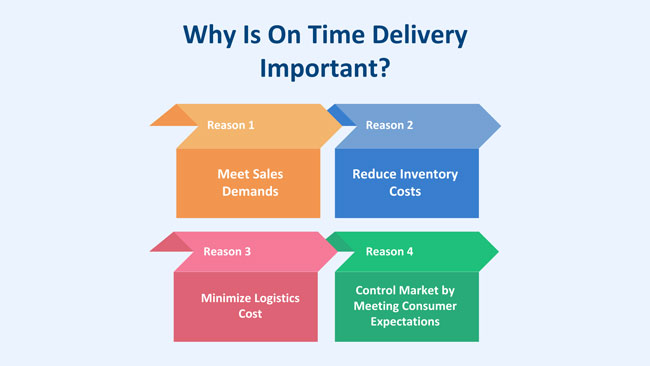
1) Meet Sales Demands
For clients who are sourcing across the board, a punctual product delivery is key to maintaining a smooth process, especially for those selling to retailers, to avoid damage to the trading relationship.
2) Reduce Inventory Costs
If the supplier can ship products on time, customers can plan inventory levels more precisely and reduce excessive inventory overhang caused by pr-stocking.
Excessive inventory levels will occupy a large amount of capital and increase the inventory management costs (like storage costs, insurance, goods losses, etc.). OTD can help them to reduce these costs and improve the efficiency of capital use.
3) Minimize Logistics Cost
Reducing shipping delays also decreases the likelihood of unexpected costs. Expedited shipping fees or lost revenue from backorders can significantly impact profit margins.
4. Control the Market by Meeting Consumer Expectations
Consistent, on-time delivery not only strengthens reliability but also shapes consumer buying habits. When suppliers deliver products on schedule, it reassures customers that they can count on these products being available when needed.
This reliability fosters trust, creating loyal consumers who prefer brands they can consistently depend on. In the long run, this builds market control by aligning with consumers’ expectations and securing lasting business opportunities.
The cost of a production delay is not limited to just upgrading freight alone. When downstream costs are considered, it usually ends up being many times more.
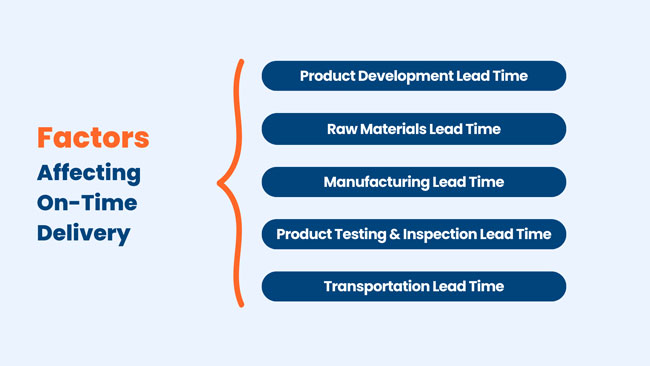
Delivery time is the amount of time it takes for a company to complete the production and delivery of a product or service. Here are elements that constitute the entire process.
- Product Development Lead Time
- Raw Materials Lead Time
- Manufacturing Lead Time
- Product Testing and Inspection Lead Time
- Transportation Lead Time
What Causes Delays in the Delivery of Products from Chinese Factories?
Product delivery time is affected by various workflows. To achieve timely delivery, we need to manage the duration of each process effectively, from product development, production, product testing, and inspection, to transportation.
We can analyze the factors that will impact the on-time delivery of products sourced from China from three perspectives.
For Suppliers:
- Full production capacity to put the order first
- Improper production plan or workflow
- Low order volume so the suppliers need to combine several orders to produce
- material unavailability and labor shortages
- quality control issues and failed final inspection
- Lack of technological advancements
- No advanced shipment booking or misestimation of delivery time
For Buyers:
- Urgent order leads to insufficient lead time
- Sudden change in product design or specification during production
- Unclear product quality requirements
- Failure to review production progress regularly
- Local time offset
- Language differences cause misunderstanding
Supply Chain Disruption:
- Port congestion affecting vessel schedules and container availability
- Extreme weather or natural disasters in areas affecting production schedules
- Trade policy changes with new tariffs or import restrictions
- Geopolitical tensions affecting shipping routes or cross-border logistics
It is critical to take action to graduate the smooth and successful sourcing process to improve supplier on-time delivery. Here are some strategies that you can apply in your operation.
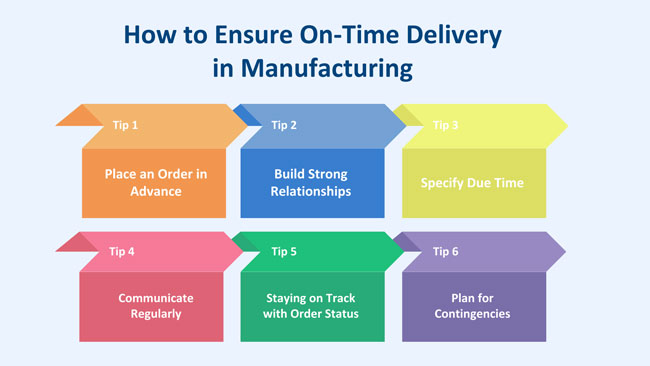
1) Place an Order in Advance
For suppliers that have limited production capacity or many large orders, the earlier you place an order, the faster the order can be processed. Reserve at least one month of buffer time for the launch date to ensure that unexpected situations may occur during this period.
2) Specify Due Time
Communicate your delivery requirements clearly at the outset. Make sure suppliers understand your deadlines and the importance of timely delivery. Avoid unilaterally assigning delivery dates and establish milestones.
3) Freeze Specifications before Production Starts
Design or specification changes during production are one of the most common causes of preventable delays. Changes after production has started require rework, re-sampling, or in some cases.
4) Staying on Track with Order Progress
Stay in touch with your suppliers throughout the production process. Regular check-ins can help identify potential issues before they cause delays.
Weekly for active orders, more frequently as the ex-factory date approaches. Confirm products to be shipped, check the goods receipt, and make sure that the products arrive on time and in the right quantities.
Have your suppliers provide weekly order tracking reports, including current production status, any issues, or QC findings that may require attention.
5) Plan for Contingencies
Have a backup plan in place. This might include alternative suppliers or expedited shipping options if delays occur.
6) Build Strong Relationships with Suppliers
Suppliers prioritize clients who are consistent, communicative, and straightforward to work with. Building good partner relationships by paying China suppliers on time and providing clear specifications, makes it more likely your orders receive attention and priority when the factory faces competing demands.
7) Sourcing Backup Suppliers
Relying on just a single supplier or single sourcing region is a structural vulnerability for on-time delivery. If your only supplier faces a capacity crunch or quality failure, you have no alternative.
Pre-qualify at least one backup supplier for critical product categories. Keep them engaged with smaller orders to maintain the relationship and confirm their capability.
8) Plan Freight Bookings Early
Vessel space, particularly during peak shipping seasons, fills up quickly. Late freight booking leads to rolled cargo, extended transit times, or forced upgrades to more expensive shipping modes. Book freight as soon as the production plan is confirmed.