
What Is Supplier Relationship Management & Why It's Important

supplier relationship management

Poor supplier relationship management is a silent killer for supply chains. Production delays, inconsistent quality, and communication gaps are the result of a broken process. If you’re only chasing the lowest price, you’re missing the bigger picture. It’s time for you to look for reliable allies who prioritize quality control, stability, and long-term growth.

This guide explains what supplier relationship management (SRM) is, why it matters in modern supply chains, and how to build stronger supplier relationships through clear processes, communication, and performance management.
Part 1. What Is Supplier Relationship Management (SRM)

1. Supplier Relationship Management Meaning

Supplier relationship management is the structured approach companies use to assess, manage, and develop their relationships with suppliers across the entire supply chain lifecycle.

SRM involves understanding each supplier’s capabilities, setting clear performance expectations, monitoring results, and building the kind of collaborative relationships that benefit both sides.

Key goals of supplier relationship management

  • Improve supplier performance
  • Reduce sourcing and operational risks
  • Increase supply chain visibility
  • Support cost control
  • Build long-term strategic partnerships
  • Improve product quality and delivery consistency

What Is the Difference between SCM and SRM

(SCM) Supply Chain Management: It refers to a comprehensive management methodology that manages the entire process from production, and transportation to sales of a product, with activities including planning, sourcing, production, distribution and after-sales activities in the supply chain. The goal of SCM is to optimize the efficiency of each link in the supply chain and to reduce the cost and risk of operations.

(SRM) Supplier Relationship Management: It is a specific subset of SCM focused exclusively on the relationships between a company and its suppliers. SRM activities are focused on developing plans, and goals, and managing relationships to build strong partnerships.

Where SCM asks “how does the whole system work?”, SRM asks “how do we work better with the people supplying into that system?” Strong SRM is what makes SCM work well. Without it, even well-designed supply chain processes break down at the supplier interface.

Part 2. Why Supplier Relationship Management Is Important

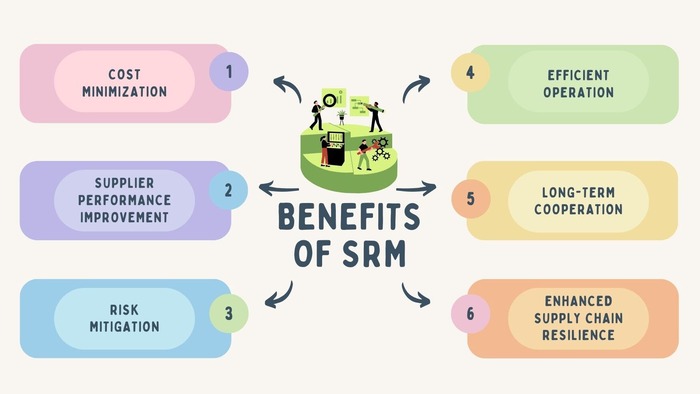
Supplier Relationship Management (SRM) is a crucial business strategy for organizations of all sizes, offering a range of advantages. The following benefits are derived from effective SRM implementation:

Benefits of Supplier Relationship Management

  • Lower Supply Chain Costs: Through building close cooperation and conducting effective negotiations with suppliers, companies can achieve cost reduction, minimizing manufacturing costs, logistics costs, and so on.
  • Improved Supplier Performance: SRM facilitates the development of robust product quality standards and performance assessment. With the help of monitoring suppliers’ performance and providing regular feedback, companies are able to promote product quality improvement, ensuring that products or services meet or exceed expectations.
  • Better Supply Chain Risk Management: By conducting thorough risk assessments in IP protection, compliance regulations and more, implementing risk mitigation strategies, and maintaining open communication channels, they can proactively address potential disruptions and minimize losses.
  • Faster Problem Resolution: SRM establishes a framework for regular supplier monitoring, feedback, and issue resolution. This lets enterprises optimize related processes, reduce the time and effort required to manage suppliers, and maintain stable and efficient supplier relationships.
  • Long-term Cooperation and Strategic Partnership: SRM is committed to establishing long-term cooperation and strategic partnerships. Enterprises can build trust and commitment over time by cultivating a deep understanding of each party’s interests and aligning goals. This paves the way for strategic planning, shared risk and reward, etc.
  • Enhanced Supply Chain Resilience: Companies can enhance their supply chain resilience through effective SRM. By diversifying and strengthening their supplier base, they can mitigate the impact of disruptions, adapt to changing market conditions, and maintain uninterrupted operations.

benefits of supplier relationship management

Part 3. Types of Supplier Relationships

Not all suppliers should be managed the same way. The nature of the relationship should reflect what the supplier actually contributes and what risk they represent.

A practical framework for thinking about supplier types:

  • Strategic/Critical suppliers: Suppliers with both strong current performance and high strategic potential. These are the relationships worth deep investment: joint planning, senior-level engagement, and genuine collaboration. In most supply bases, this group is smaller than companies expect — often just a handful of suppliers.
  • Preferred/Stable suppliers: Reliable, consistent performers with established processes. Managed actively but with less intensity than strategic partners. The priority here is maintaining performance and incremental improvement.
  • Transactional suppliers:  Lower strategic value, often replaceable. Managed primarily on price and delivery performance, with streamlined, efficient processes.
  • Underperforming suppliers: Suppliers with performance issues that require active intervention. The decision here is whether to invest in improvement or manage an orderly exit.


Segmenting your suppliers into meaningful categories and actually using that segmentation to allocate management attention is the foundation of any SRM approach that delivers results.

One important note: many organizations overuse the label “strategic.” Research in supply chain management consistently suggests that suppliers with genuinely high strategic potential represent a very small fraction of a typical supply base. The rest are important, but different

Part 4. How to Manage Supplier Relationships

1. Segmenting Supplier Groups

Suppliers are segmented into different groups based on factors such as the services they provide, the company’s goals, and strategies. These groups can include strategic, tactical, or tail suppliers. Each group requires different management approaches. Supplier segmentation provides valuable information for future supplier selection, making the process more effective in identifying suitable suppliers and facilitating supplier evaluation.

segment suppliers for management

2. Customizing Strategies and Objectives for SRM Programs

SRM programs should be tailored to align with the company’s overall business objectives. These objectives may focus on cost reduction, innovation, time savings, or other specific goals. Depending on the type of company, there are varying strategies and objectives. Based on these goals, it is helpful to select the right suppliers and establish specific criteria for supplier evaluation.

set objective for srm

3. Measuring Supplier Performance

In line with the customized SRM program objectives, companies can set specific performance metrics for each supplier group to assess their performance against agreed-upon targets. Metrics can include factors like on-time delivery, quality, responsiveness, innovation, or sustainability. Continuously monitoring and evaluating supplier performance using these metrics helps companies provide feedback and address any performance gaps to drive continuous improvement.

measure supplier performance

4. Developing Supplier Management Plans

Create detailed plans for managing relationships and interactions with each supplier group. Outline communication channels, frequency of meetings, reporting requirements, and collaboration initiatives. Besides, clarify the roles and responsibilities of each member within the team, ensuring that both the company and the suppliers understand their obligations and expectations. Engaging suppliers and providing them with the necessary information in these plans develop collaboration and help achieve strategic objectives.

supplier management plan

5. Communicating and Collaborating in a Transparent Manner

Open and honest communication serves as the foundation for building trust in successful business collaborations. Transparent discussions and information sharing on suppliers’ performance foster mutual understanding and facilitate effective collaboration between companies and suppliers. It enables both parties to openly discuss expectations, challenges, and opportunities and then leads to stronger relationships and shared success.

open communication

6. Continuous Improvement of Supplier Relationship Management Strategies

Supplier relationship management strategies should be continuously reviewed and improved to adapt to evolving business needs and market dynamics. Regular evaluation of the effectiveness of SRM programs allows companies to discover enhancements and implement necessary adjustments.

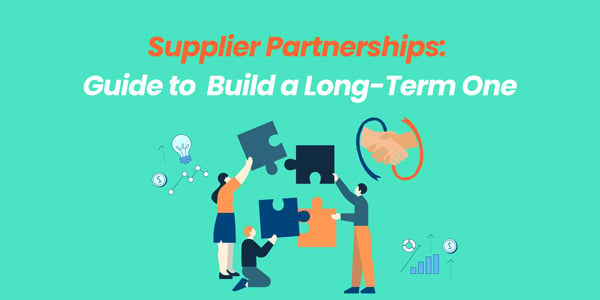
SRM aims to establish and maintain long-lasting and fruitful relationships with suppliers. This indicates that SRM goes beyond immediate gains and focuses on fostering sustained collaboration and mutual growth. The relationships and continuous improvement make companies able to unlock the full potential of their supplier network and create a foundation for strategic advantages in the long run.

improve supplier relationship management strategy

Part 5. Supplier Relationship Management Best Practices

Based on how effective supply chain teams approach supplier management, these practices consistently make a difference:

  • Start with segmentation, not process — Don’t try to manage every supplier the same way. Focus your energy where the strategic value is highest and the risks are most significant.
  • Make performance data visible — Suppliers who can see their own performance data are more likely to act on it. Transparency tends to drive improvement more effectively than pressure alone.
  • Treat it as a two-way relationship — The best SRM outcomes come when suppliers feel like genuine partners. Share your business plans and challenges with key suppliers too — not just your requirements.
  • Give consistent, clear signals — Suppliers should know where they stand in your thinking and what you want from them going forward. Mixed messages produce mixed results.
  • Don’t wait for problems to communicate — Regular proactive check-ins prevent small issues from becoming major disruptions.
  • Document agreements and decisions — Clear records of commitments, performance reviews, and corrective actions protect both parties and support continuity when personnel changes.
  • Keep the measurement system simple — Overly complex supplier scorecards get ignored. Focus on the metrics that actually differentiate strong performance from weak performance.
  • Make it a business priority, not just a procurement activity — The companies that get the most from SRM treat it as a cross-functional initiative with executive ownership, not something that lives only in the procurement department.

FAQ about Supplier Relationship Management

Q1. What Are the Challenges of SRM?

Supplier Relationship Management (SRM) brings benefits to organizations, but it’s important to acknowledge that effectively managing supplier relationships can be a challenging process. Here are some of the common challenges in SRM:

  • Time and effort required to find suppliers that meet the company’s requirements and strategic goals.
  • Difficulties in establishing and maintaining open and transparent communication channels with multiple suppliers.
  • Challenges in ensuring consistent product quality across various suppliers.
  • Communication barriers arising from working with diverse suppliers.
  • Potential risks associated with suppliers, environment, society, etc.
  • Challenges in managing data and ensuring its security.

Q2. What are the most important SRM metrics to track?

The most universally useful SRM metrics are on-time delivery rate, defect or rejection rate, responsiveness, compliance status, and cost variance. For strategic suppliers, innovation contribution and sustainability performance are increasingly important additions.

Q3. How often should supplier performance be reviewed?

For strategic suppliers, formal reviews every quarter, with less formal check-ins monthly.

For preferred suppliers, semi-annual reviews with exception-based follow-up.

For transactional suppliers, annual reviews are usually sufficient unless performance issues arise.

Q4. What are the problem with most SRM programs?

Many companies have implemented something they call SRM without achieving meaningful results.

The reason, according to research and consulting experience across industries, is that most organizations focus on the trappings of SRM: the processes, tools, and terminology.

What they miss is that effective SRM is fundamentally about changing behaviors both the supplier’s and the customer’s.

Common patterns that signal an SRM program isn’t working:

  • Heavy investment in process design, with limited focus on actual outcomes
  • SRM treated as a “procurement topic” rather than a cross-functional business priority
  • Supplier segmentation that exists as a document but doesn’t drive how decisions are actually made
  • Review meetings that become contract compliance discussions rather than forward-looking conversations
  • “Partnership” language applied broadly to all large suppliers, diluting the term until it means nothing


The distinction between procedural SRM and effective SRM is significant. Procedural SRM creates the appearance of structure. Effective SRM actually changes how suppliers engage with your business, and what they’re willing to bring to the relationship.

Wrapping Up

Overall, supplier relationship management is a critical strategy for companies seeking to optimize their supplier partnerships and realize their objectives. SRM offers numerous advantages for companies, including cutting costs, enhancing supplier performance, increasing efficiency and more. However, SRM also comes with its share of challenges. Managing supplier relationships can be a complex task that requires careful attention and proactive strategies.

To establish a robust SRM framework, organizations should set clear goals, implement effective communication strategies, define performance metrics, and continuously update their practices. With these actions, companies can foster resilient and long-lasting relationships with their suppliers.

SRM is not a short-term tactic; it is an enduring and integral business strategy. Companies with experience in the supply chain field tend to be more comfortable with SRM practices. When dealing with the supply chain, finding the right partner can save a significant amount of time. SVI Global, with its extensive experience in supply chain management, offers services to assist companies worldwide. Our company has its service team in countries across the world, including the U.S., China, Mexico, India and other promising countries. We have a vast network of reliable suppliers, enabling us to quickly identify factories that meet specific requirements while assuring clients of product quality and timely delivery.

If you are interested in outsourcing services in supply chain management, we are here to provide assistance and support at any time.

Table of contents

Related Blog
Get in Touch

Send us a message, we’ll get back to you within 24 business hours.

Get a Free Quote Now!

Send us a message, we’ll get back to you within 24 business hours.

Message

Reading Club

The goal of SVl Reading Club is to READ, THINK, and ENJOY. 

Club members will explore a shared classic book each session. Through individual reading, club discussions and sharing of reading inspirations, members will engage in meaningful and thoughtful exchanges of ideas. Cultivating a reading habit will help to promote cognition, enhance your knowledge, and foster flexible thinking.

reading club