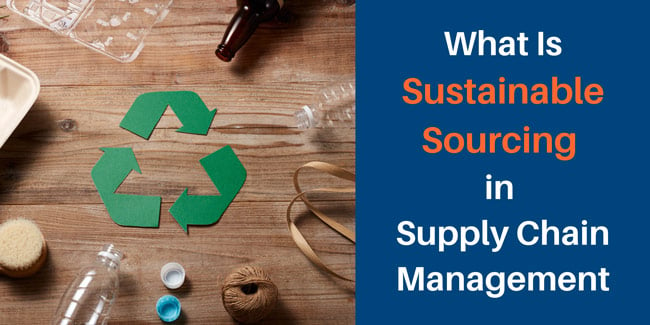
What Is Sustainable Sourcing in Supply Chain Management
- Date:
- Author: SVI Content Team
- Share:
Today’s social climate has sustainability as the issue that people have always cared for the most. Sustainable sourcing has become a business requirement due to the regulations, media attention, and consumer expectations.
For importers, it has been incumbent upon them to start looking not only at pricing and quality, but at other aspects such as environmental considerations, social considerations, and supply chain implications while making decisions on their sourcing strategies.
In this guide, you’ll learn what sustainable sourcing is, its importance, the challenges, and what sustainable materials and packaging can help support your sustainability goals.
Part 1. What Is Sustainable Sourcing
Sustainable sourcing is the practice of considering environmental, social, and economic impacts throughout the entire sourcing process. Instead of focusing solely on short-term costs, sustainable sourcing aims to build a responsible and resilient supply chain that supports long-term business success.
It’s built on the Triple Bottom Line framework: three dimensions that must be balanced for sourcing to be sustainable. It requires you to look at:
1) Environmental impact: Reducing the ecological footprint of production through sustainable materials, lower carbon emissions, reduced resource consumption, and less waste.
2) Social responsibility: Ensuring suppliers provide safe working conditions, fair wages, ethical labor practices, and compliance with labor regulations throughout the supply chain. Social compliance audits are one tool for verifying this.
3) Economic viability: Maintaining competitive costs while ensuring long-term supply chain resilience and fair trade practices.
In short, sustainable sourcing meaning can be understood as the approach that balances environmental, social, and commercial interests to meet present needs without compromising future generations’ capacity to meet their own.
Part 2. Why Is Sustainable Sourcing Important
Supply chains are one of the largest sources of environmental and social impact. The sourcing decisions a company makes can affect far more than its own operations. As a result, sustainable sourcing is increasingly becoming a business requirement.
Growing Requirements from the Market
1) Retail sustainable sourcing requirements: Major retailers such as Walmart, Target, and Costco have established supplier sustainability programs that require vendors to provide environmental data, certifications, and compliance documentation. Suppliers that cannot meet these requirements may struggle to qualify for new business opportunities.
2) Regulatory pressure: Markets are introducing stricter sustainability regulations that affect both products and supply chains. Companies may be required to disclose sustainability information, verify responsible sourcing practices, or ensure packaging meets recyclability and recycled-content requirements. For example, the EU’s Packaging and Packaging Waste Regulation (PPWR) will introduce new packaging requirements across the European market beginning in 2026.
3) Consumer and investor pressure: According to PwC’s 2024 Voice of the Consumer Survey, 80% of consumers are willing to pay more for sustainably produced or sourced products, with an average premium of 9.7%.
At the same time, investors are increasingly evaluating companies based on ESG performance and supply chain sustainability. Businesses that can demonstrate responsible sourcing practices are often better positioned to attract investment.
Benefits of Sustainable Sourcing
1) Reduced Environmental Impact: Responsible material and production practices lower waste, emissions, and natural resource consumption in forests, water, etc.
2) Lower Long-Term Costs: Reduces material waste, improves efficiency, and helps control operating costs over time.
3) Reduced Supply Chain Risk: Minimizes compliance, quality, and sourcing risks through better supplier and material management.
4) Stronger Brand Reputation: Strong social and environmental performance in your supply chain supports brand trust.
5) Higher Customer Loyalty: Consumers increasingly prefer sustainable products and are more likely to make repeat purchases.
McKinsey research suggests that sustainable and ESG-related claims can increase consumer preference and repeat purchase behavior, with brands that derive more than half of sales from ESG-related products seeing 32–34 percent repeat rates.
6) Better Market Access – Helps meet retailer, customer, and regulatory sustainability requirements.
7) Innovation and Long-term Viability: Encourages the adoption of new materials, sustainable packaging solutions, and production technologies and builds stronger supplier relationships and supports long-term business stability.
Part 3. What Are the Challenges of Sustainable Sourcing
For you who are sourcing overseas, you may find the following challenges:
Material Challenges
- Higher upfront costs: Sustainable materials, certifications, and compliance programs often involve higher upfront costs than conventional alternatives. Although costs may decrease over time through efficiency gains, the initial outlay may deter companies from adopting these materials.
- Limited availability and MOQ requirements: Certified sustainable materials or products may have limited supply, higher minimum order quantities, or longer lead times.
- Third-party verification: It is necessary to conduct third-party verification to ensure that a material meets the standard it claims to meet because not all sustainability claims are supported by certification.
- Performance trade-offs: Some sustainable alternatives don’t perform identically to the materials they replace in terms of durability, moisture resistance, or print quality. Testing before committing to production is essential
Supplier Challenges
- Limited Supply chain visibility: Most companies have visibility over their direct suppliers but limited insight into upstream tiers.
- Supplier capability gaps: Some small Asian manufacturers may not have the capacity or proper systems and documentation to satisfy sustainability practices. The development takes time and often requires buyer investment or support.
- Inconsistent standards: Sustainability requirements vary across countries, industries, retailers, and certification bodies. Keeping up with changing standards and ensuring compliance across multiple markets can be complex.
Part 4. What Are Sustainable Materials and Packaging
Sustainable Sourcing of Materials
Choosing sustainable materials starts with understanding what alternatives exist for your product category and what trade-offs each involves.
1) Recycled Materials
Materials made from post-consumer or post-industrial waste.
- Examples: recycled metal, plastic (PCR), glass, and paper and cardboard.
- Key Consideration: Verify material purity, contamination risk, certification (e.g. GRS), batch consistency
2) Biodegradable Materials
Materials derived from renewable biological sources.
- Examples: bamboo, mycelium, and wood pulp-based fibers.
- Key Consideration: Compostability conditions, scalability of raw materials, and end-of-life disposal infrastructure.
3) Certified Materials
Materials verified through sustainability certification systems.
- Examples: FSC-certified wood & paper, GRS-certified recycled materials, ISCC PLUS-certified bio-based materials
- Key Consideration: Chain of Custody (CoC) traceability, valid certification scope (not just finished product), audit documentation.
4) Low-carbon materials
Materials designed to reduce emissions during production.
- Examples: Low-carbon steel, low-cement / blended cement concrete, low-impact aluminum
- Key Consideration: Verified carbon footprint (LCA data), energy source transparency, cost vs performance trade-off.
Types of Sustainable Packaging Solutions
1) Recycled / recyclable paper and board
- Feature: Widely recyclable, FSC or recycled content available
- Suitable Products: Consumer goods, e-commerce, electronics
- Certification: FSC / SFI
2) PCR plastic
- Feature: Made from post-consumer recycled content; reduces virgin plastic demand
- Suitable Products: Household products, cosmetics, FMCG
- Certification: GRS
3) Bio-based / compostable
- Feature: Plant-derived materials; breaks down under composting conditions
- Suitable Products: Food service, cutlery, food packaging
- Certification: EN 13432 / ASTM D6400 / BPI
4) Reusable packaging
- Feature: Durable, designed for multiple use cycles
- Suitable Products: B2B industrial transport, retail refill models
- Certification: Market-specific
5) Eco-friendly cushioning
- Feature: Paper-based bubble wrap alternatives, moulded pulp inserts
- Suitable Products: Fragile consumer goods, electronics
- Certification: Recyclable content verification
6) Packaging reduction & lightweighting
- Feature: Minimizes packaging material usage through optimized design
- Suitable Products: FMCG, e-commerce, consumer products
- Certification: Maintain product protection and shipping performance while lowering production and transportation costs
Tips: How to Verify Sustainable Packaging Sourcing
Before approving a packaging supplier’s sustainability claims:
- Ask for the specific certification number and verify it against the certifying body’s public database.
- Request material origin documentation to trace the material from the source to your packaging component
- Check upstream suppliers to ensure your supplier can document where their raw materials come from.
- Request samples for independent testing to validate recycled-content or compostability claims.
- Confirm that documentation is current before placing orders
Part 5. How to Implement Sustainable Sourcing Strategy: Step by Step
Step 1: Assess your current sourcing baseline
Identify the materials, packaging, and suppliers that have the greatest environmental impact. Review existing certifications, recycled content levels, and compliance gaps to establish a clear starting point.
Step 2: Set specific, measurable goals
Define specific goals such as recycled content requirements, certified material usage, supplier compliance rates, or packaging reduction targets. Ensure goals align with customer expectations and regulatory requirements.
Step 3: Integrate sustainability criteria into supplier selection
Include sustainability criteria in supplier evaluations. Specify required certifications, traceability documentation, and environmental practices alongside quality, cost, and production capabilities.
Step 4: Communicate requirements and collaborate with suppliers
Share your sustainability requirements before sourcing decisions are finalized. Work with suppliers to understand current capabilities, identify gaps, and establish realistic implementation timelines.
Step 5: Redesign for efficiency where possible
Look for opportunities to reduce material usage, simplify packaging, and replace conventional materials with more sustainable alternatives without compromising performance.
Step 6: Test sustainable materials before committing
Evaluate samples for durability, functionality, compliance, and product protection. Confirm that alternative materials meet performance requirements before approving production.
Step 7: Verify before shipment
Inspect packaging materials, certification markings, labels, and supporting documentation to ensure approved materials are used and sustainability requirements are met.
Step 8: Monitor, audit, and iterate
Track sustainability KPIs, conduct supplier reviews, and perform periodic audits to identify improvement opportunities and maintain long-term compliance.
Conclusion
A well-executed sustainable sourcing strategy can deliver benefits beyond environmental goals. It helps businesses reduce supply chain risk, improve regulatory compliance, and strengthen brand reputation. In many cases, it can also uncover opportunities to optimize packaging, reduce material waste, and improve long-term cost efficiency.
The key is to approach sustainability as part of your sourcing process. The process is not without challenges. Verifying supplier claims, managing certifications, maintaining traceability, and finding cost-effective, sustainable materials can require significant time and resources.
To simplify the process, SVI Global helps you build more transparent and sustainable supply chains while maintaining quality, compliance, and cost competitiveness. We cover the end-to-end service from supplier qualification and factory audits to certification verification, sourcing, testing, and quality control.